
My friend Ruth and I share a love for music by Rachmaninoff, so we jumped at the opportunity to get tickets to last night’s Utah Symphony concert that included music by Ravel, Rachmaninoff, and Strauss. While we are familiar with and love all three composers, the specific pieces on last night’s program were new to both of us.
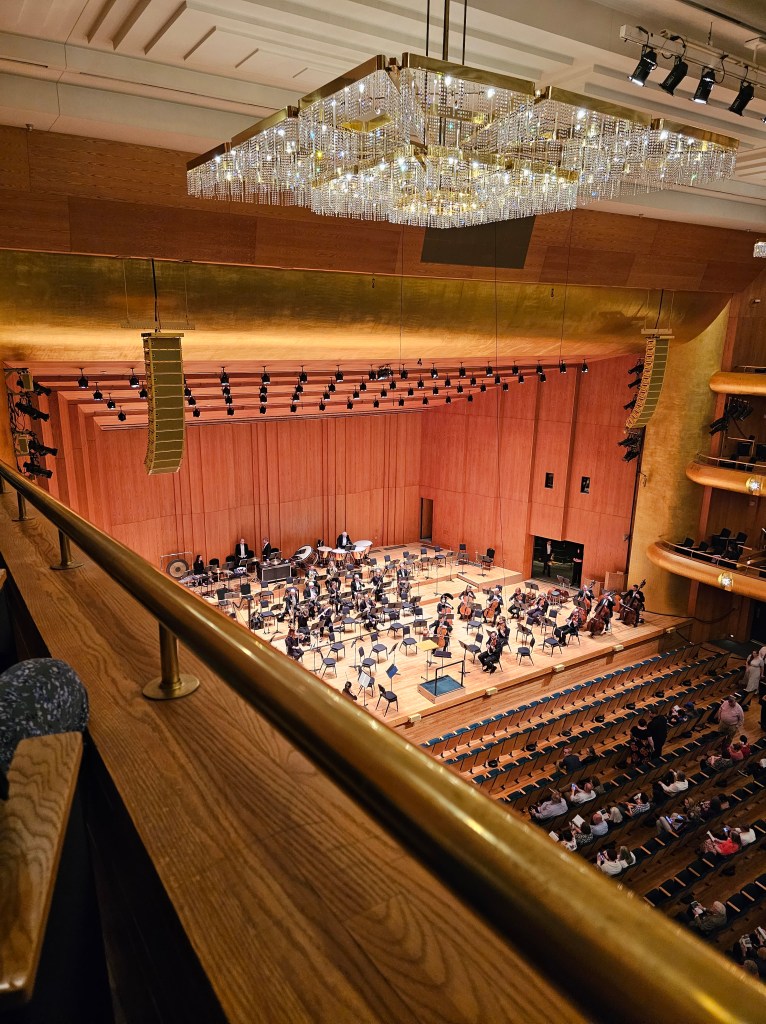
We chose to sit on the left side of the third tier which features a single row of seats facing the stage. For me, and I think for Ruth, that is a preferred place to sit. It offers a bird’s-eye view of the stage which is particularly desirable when the symphony has a guest soloist, and you want to see their expressions or movements more clearly. I also have found that sitting in the single row of the third tier provides a more intimate experience of the music because you’re “at one” with what is happening on stage rather than being distracted by patrons around you.
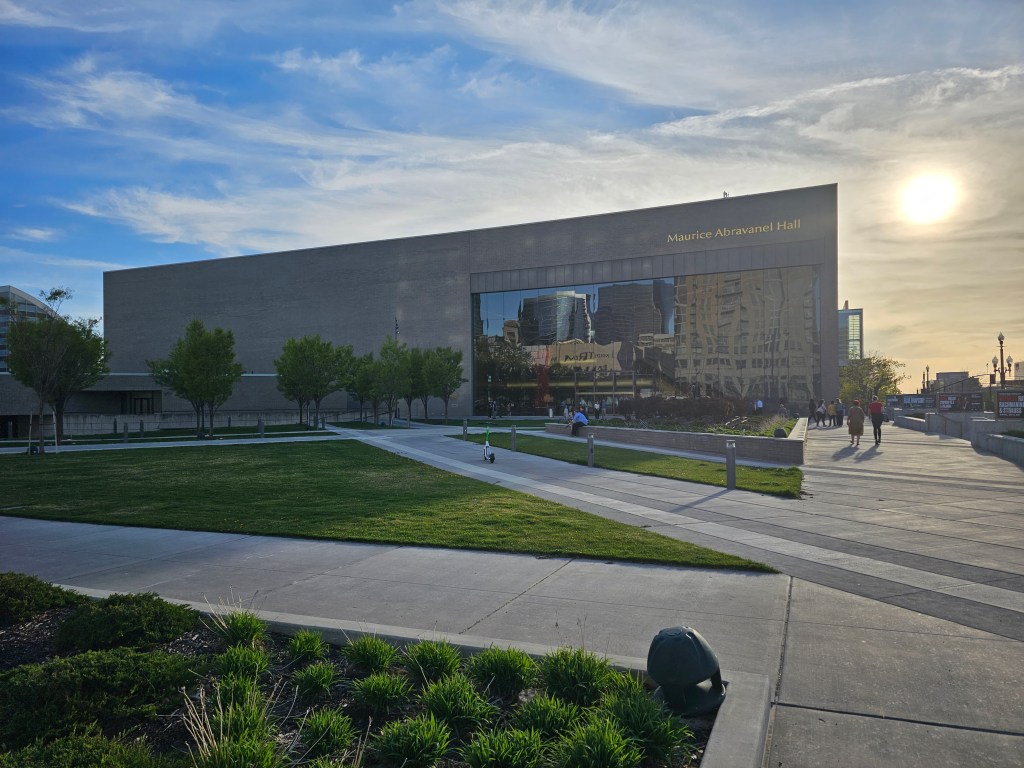
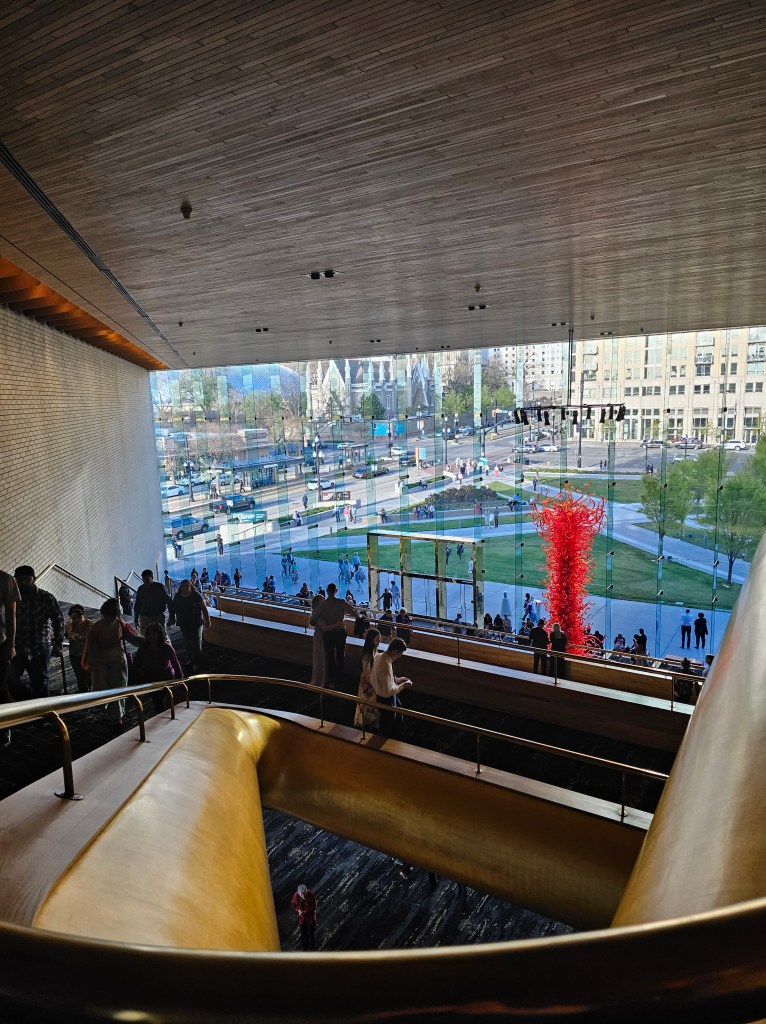
Accessing the third tier is a beautiful experience in itself because you have a spectacular vantage point from which to take in the design and artistry of Abravanel Hall. From multiple angles, you are able to see the lobby with the red Chihuly glass sculpture, the sweeping (and also daunting) diagonal staircase, the building’s multiple levels and landings, the plaza outside, and several downtown SLC landmarks. The brilliance of the building sets an elegant stage for what will occur in the concert hall.
German conductor Kevin John Edusei took the podium last night. I enjoyed and appreciated his conducting style. Similar to Utah Symphony’s regular conductor Thierry Fischer, Edusei led the symphony with a subtle, understated approach that let the music flow freely. I prefer this conducting style to those conductors who are overly aggressive and demonstrative in their conducting. I want a conductor to get out of the music’s way and let the music speak for itself. Edusei succeeded in this.
Last night’s program included Ravel’s Valse, Rachmaninoff’s Isle of the Dead, Op. 29, and two works by Richard Strauss: Duet-Concertino for clarinet and bassoon and Suite from Der Rosenkavalier, Op. 59. A common theme that I noticed among all of the pieces was a portrayal of darkness and light — sections that sounded somber, sinister, and brooding mixed with passages that were joyful and radiant. The program was dynamic and engaged the imagination.
- Ravel’s Valse, an homage to the traditional waltz, transported me to late 19th and early 20th century Paris and thoughts of couples dancing at lavish parties in gilded halls.
- Rachmaninoff drew his inspiration for Isle of the Dead from a black and white reproduction of Arnold Bocklin’s painting of the same name. The music aptly depicts the simultaneously tumultuous and tender journey from life to death, symbolized as a boat on the water. I loved the intense, sweeping string sections in this piece that were used to tell this story.
- The Strauss duet-concertino highlighted performances from principal clarinetist Tad Calcara and principal bassoonist Lori Wike. I enjoyed the lyrical, legato playing of both principals, particularly as the bassoon is rarely featured in a solo or duet role.
- The suite from Der Rosenkavalier, also by Strauss, featured stirring and sweet string passages, complemented by the brass. I appreciated this ending to the evening’s program.
The Utah Symphony consistently provides world-class entertainment that awes and inspires, and last night was no exception. Taking the opportunity to go was well worth it. For more information about upcoming Utah Symphony performances or tickets, click here.


I love Rachmaninnoff music, is the kind of songs to take you to another place.
LikeLike
Rachmaninoff’s music definitely does that!! One of my favorite pieces is his Piano Concerto No. 2. ❤️
LikeLike