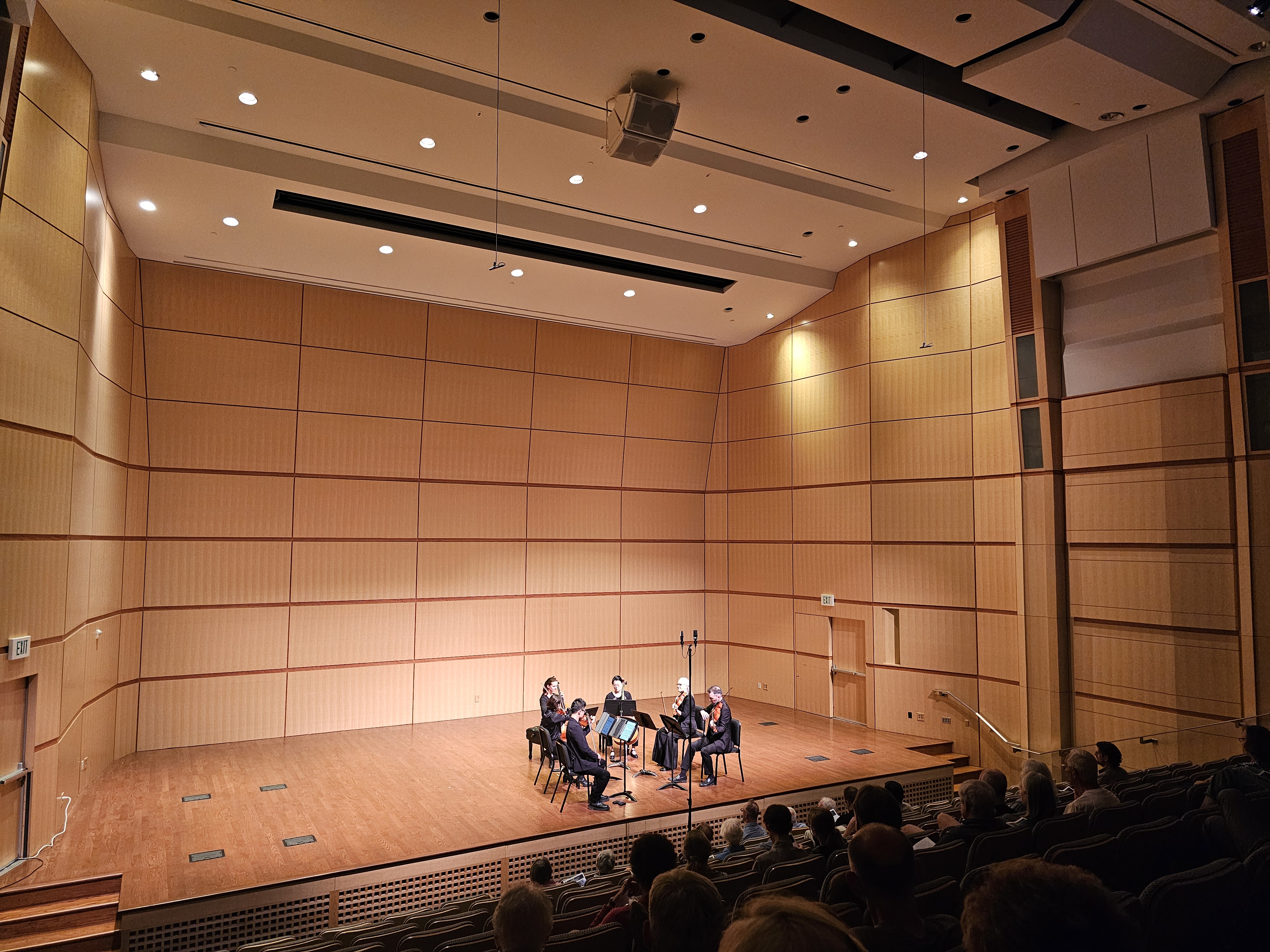
Intermezzo Chamber Music Series continued its summer season with Concert III on Monday, July 14. Lun Jiang (violin), Erin David (violin), Emily Brown (viola), Joel Gibbs (viola), Pegsoon Whang (cello), and Hannah Holland Thomas (cello) joined forces to perform works by Anton Webern, Richard Strauss, and Johannes Brahms. These musicians created a beautiful, cohesive sound in all of the pieces on the program, and the music’s lush, romantic melodies captivated me throughout the evening.
Lun Jiang, Erin David, Emily Brown, and Pegsoon Whang started the evening with Anton Webern’s “Langsamer Satz,” a single-movement work that the composer originally intended to develop into a full string quartet, but after completing this “slow movement” and putting it aside, he never composed the additional movements. As stated in the program notes, the piece demonstrates Webern’s “unabashed romanticism,” shaped by his optimistic outlook as a young man in love. It delights listeners with a passionate, sweet melody in the violins that flows like the inhale and exhale of breathing. At times, the melody moves with energy and intensity, expanding into beautiful, broad notes. At other times, it is extremely delicate, featuring notes high on the fingerboard. Both violinists have opportunities to shine since carrying the melody alternates between them. Lun Jiang and Erin David complemented each other well with evenly matched playing. Lovely cello and viola melodies support the violins throughout, and Emily Brown and Pegsoon Whang executed these well.
Joel Gibbs and Hannah Holland Thomas joined the original four musicians to perform Richard Strauss’s Sextet – “Capriccio,” Op. 85, a work that is often performed as a standalone chamber piece, but it is also the beginning of the composer’s final opera of the same name. The opening violin melody is bright and cheerful as it evokes a sense of nostalgia. This melody recurs and is taken up by the viola and second violin later in the piece. Intensity builds and explodes into alternating fast-moving passages punctuated by thoughtfully accented notes. The melody becomes legato with a full, rich sound. I loved the magnificent synergy the ensemble created as each musician’s performance enhanced the others. I also appreciated Lun Jiang’s subtle approach to playing the music. He produced energy and emotion while making it look effortless and relaxed.
All six musicians finished the evening with String Sextet No. 2 in G Major, Op. 36 by Johannes Brahms. The four-movement work is complex, melodic, and powerful, and the musicians delivered another stunning performance.
- I. Allegro non troppo – I loved this movement’s repeated lyrical violin melody, its undercurrent of moving notes in the lower strings, and its dramatic ending.
- II. Scherzo. Allegro non troppo. Presto giocoso – This movement is incredibly dynamic with a light, effervescent beginning, violins playing in unison, a beautiful high violin solo, and a boisterous finish. I really liked all of its contrasts!
- III. Adagio – The third movement juxtaposes tenderness and intensity. I particularly enjoyed its deliberate, measured pacing as the violin and viola play in unison throughout legato passages. I also loved the movement’s very delicate ending.
- IV. Poco allegro – The piece ends with a brisk, playful fourth movement. Its fast pace and accented groups of notes create a dance-like quality that is exhilerating to listen to!
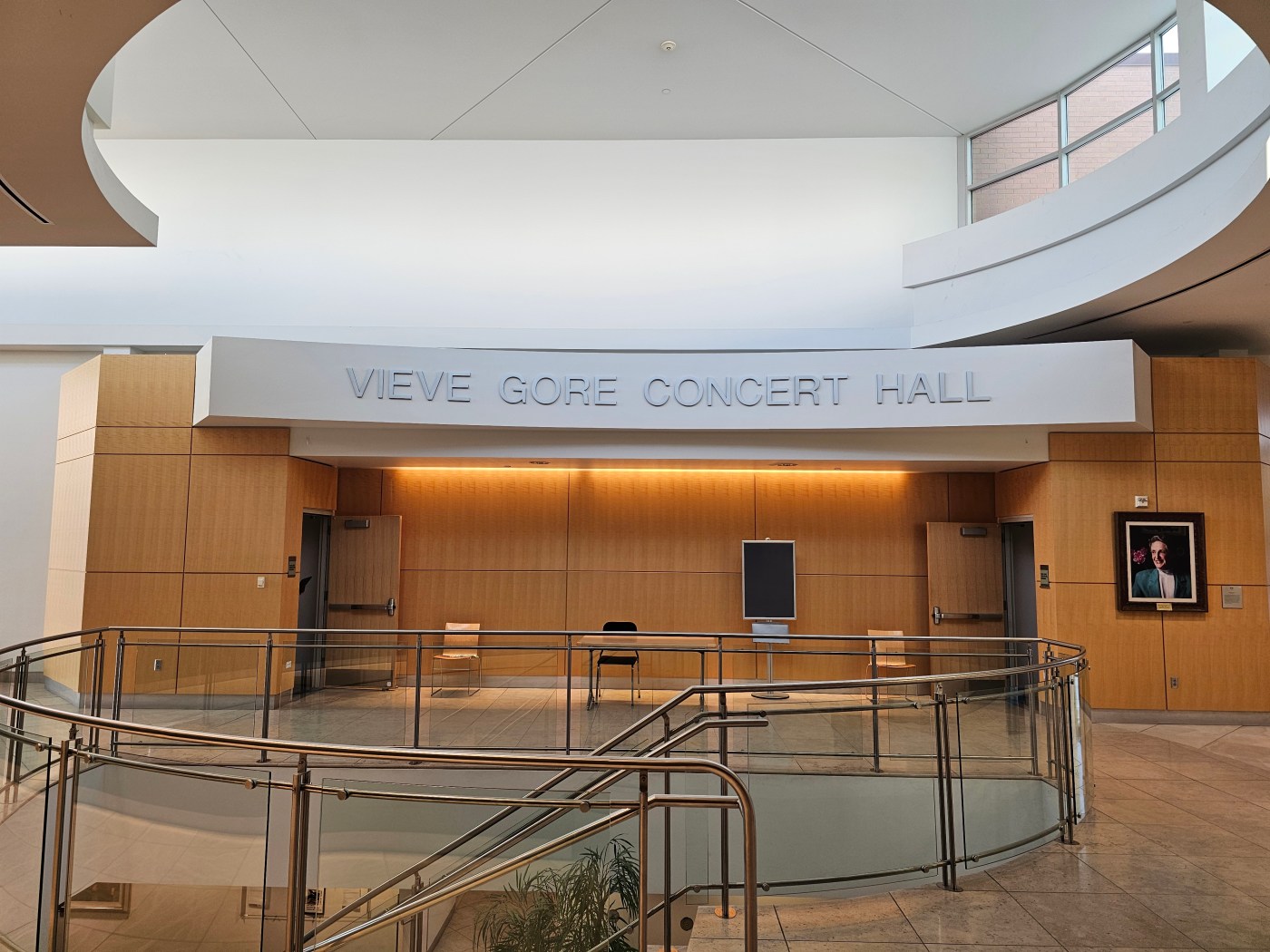
Intermezzo Chamber Music Series’ final summer concert will be on Monday, August 4, 2024 at 7:30 p.m. in the Vieve Gore Concert Hall at Westminster University. Click here for information and tickets.



 The Good Life
Leave a comment