
Summertime means the return of Intermezzo Chamber Music Series, one of my favorite concert series of the year. This summer, Intermezzo returns to the Vieve Gore Concert Hall on the campus of Westminster University. (For those who may not be aware, Westminster College of Salt Lake City updated its name to Westminster University in 2023, reflecting the institution’s growth and current offerings.) Westminster’s campus and the concert hall provide a lovely, intimate spot for Intermezzo’s engaging programming on Monday evenings, easily making for some summer highlights. Summer is moving along quickly, so two concerts are already in the books for this season. I focus here on Concert I, and my review of Concert II also is in the works.
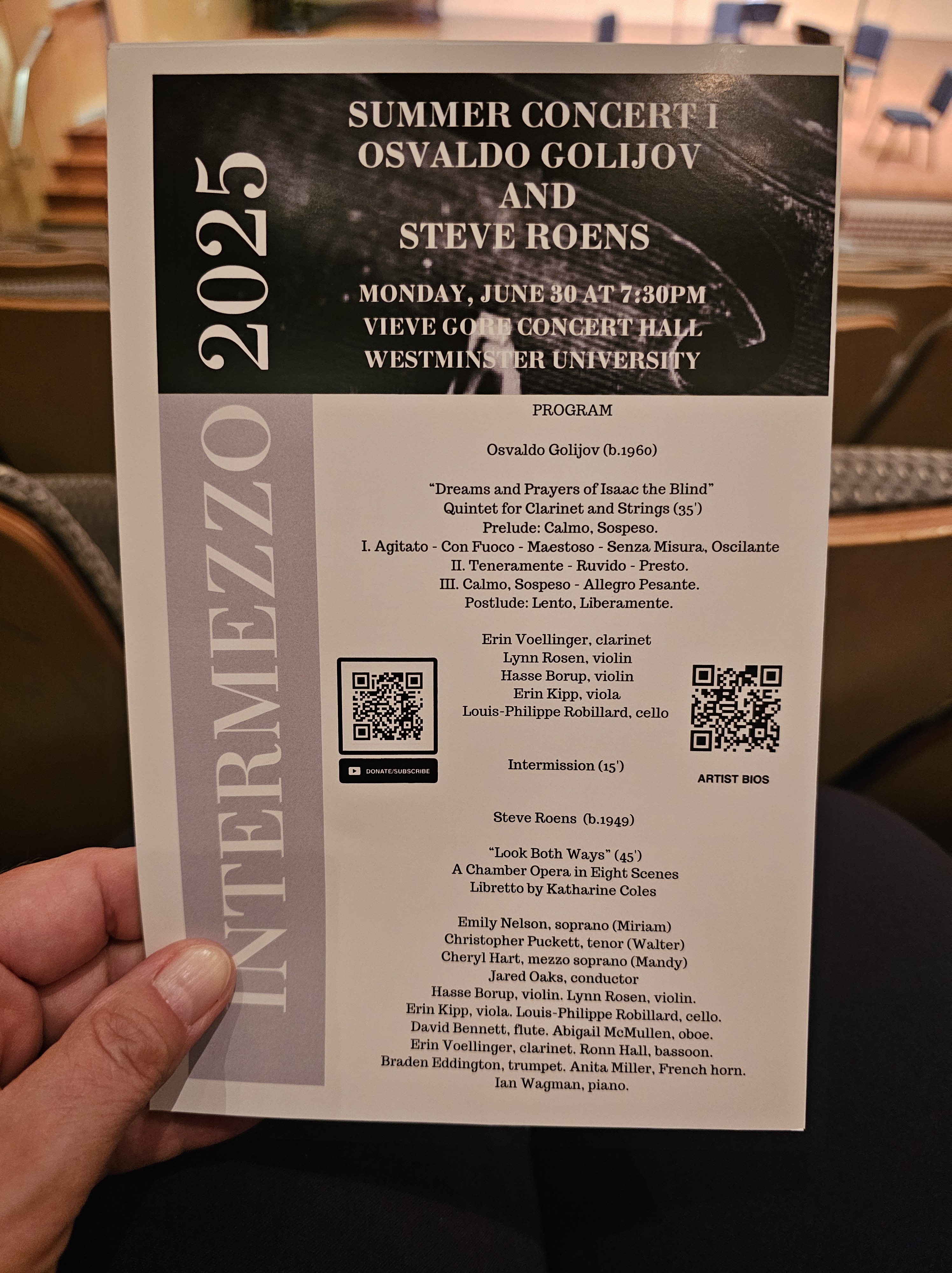
Intermezzo began this summer’s season on Monday, June 30, 2025 with two contemporary pieces: Osvaldo Golijov’s “Dreams and Prayers of Isaac the Blind” and “Look Both Ways” by Steve Roens and Katharine Coles. Contemporary compositions stretch my musical awareness and preferences, and I really liked both of these pieces.
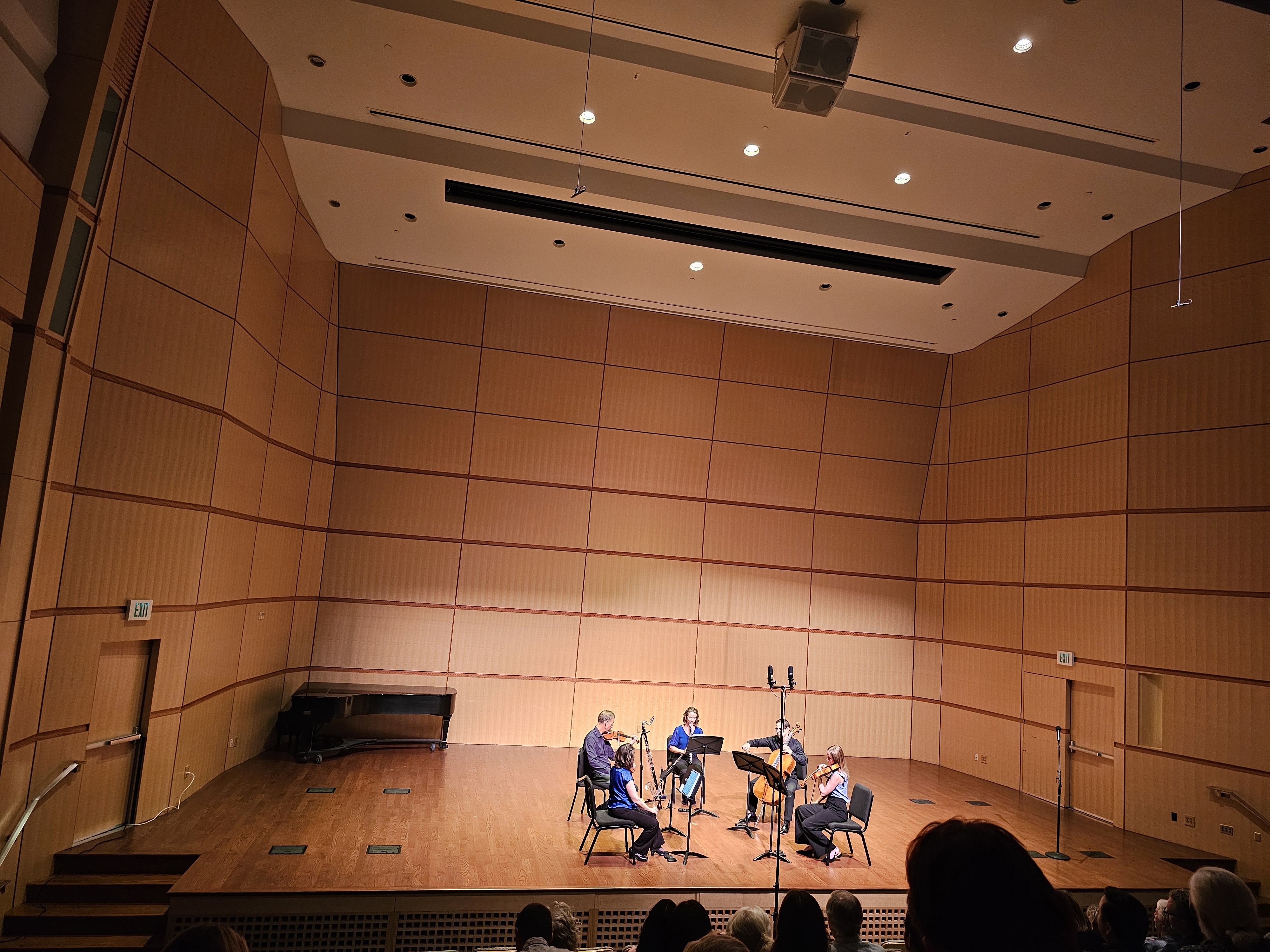
Golijov’s “Dreams and Prayers of Isaac the Blind” is a quintet for clarinet and strings that resembles an epic poem and conveys a comprehensive history of Judaism — from Abraham, exile, and redemption to the distinct sounds of Aramaic, Yiddish, and Hebrew. Erin Voellinger (clarinet), Lynn Rosen (violin), Hasse Borup (violin), Erin Kipp (viola), and Louis-Philippe Robillard (cello) skillfully performed this piece which includes a prelude, three movements, and a postlude. The piece was particularly demanding for Voellinger who had to alternate among three different clarinets to create the unique sounds the piece demanded. The prelude is pensive and sorrowful, with hints of foreboding, giving space for reverence and lament. It highlights the clarinet with low notes that anchor the overall sound and a higher, more powerful moving melody. The next movement is titled with several descriptors that accurately reflect its character: agitato (agitated), con fuoco (with fire), maestoso (majestic), senza misura (free timing, without measure), and oscilante (oscillating, swaying). It provides a definite contrast to the prelude with its furious, chaotic, and pulsating rhythms and its demanding high notes for the clarinet and violins. Next, Teneramente, teases with a very gentle beginning that evolves into a flowing and then playful clarinet melody that contains a lot of emotion and evokes Jewish folk melodies. The third movement, Calmo, creates a breathy, airy effect with very light pressure on the strings while the clarinet sings a passionate, melancholy melody. This culminates in a fever pitch of accented notes for both the strings and clarinet. The piece concludes with a slow, deliberate postlude that resembles the contemplative nature of the prelude. I loved the variety of sounds, rhythms, melodies, and moods throughout the piece, and in particular, the swaying syncopation of the first movement stood out to me.
This concert saw the premiere of a chamber opera in eight scenes titled “Look Both Ways” by composer Steven Roens and librettist Katharine Coles. The opera is based on the first part of Coles’ memoir about her grandfather Walter, grandmother Miriam, and great-grandmother Mandy. It follows their story from Walter and Miriam’s first meeting at ages 22 and 16, respectively, to the eve of their wedding, covering the years 1923-1929. The narrative and its accompanying music convey a complicated set of emotions and developments in their relationship: Miriam’s initial excitement at having a new boyfriend, emerging doubt about Walter, comparing him to other worthy suitors, desiring independence, wanting to accompany Walter as he works in the oil fields, being told that isn’t the place for her, Walter’s growing ambition and experience of hardship, Miriam’s increasing doubt about agreeing to a marriage, Walter’s threatening violence if Miriam doesn’t agree, Miriam’s succumbing to the marriage, and Mandy’s worry for her daughter. The relationship appeared difficult and filled with strife as a young woman struggled to carve out a meaningful place for herself at a time when women couldn’t assert an autonomous voice, stating or realizing their own desires and ambitions. The piece is filled with pathos and stirs empathy for the characters’ onerous situation.
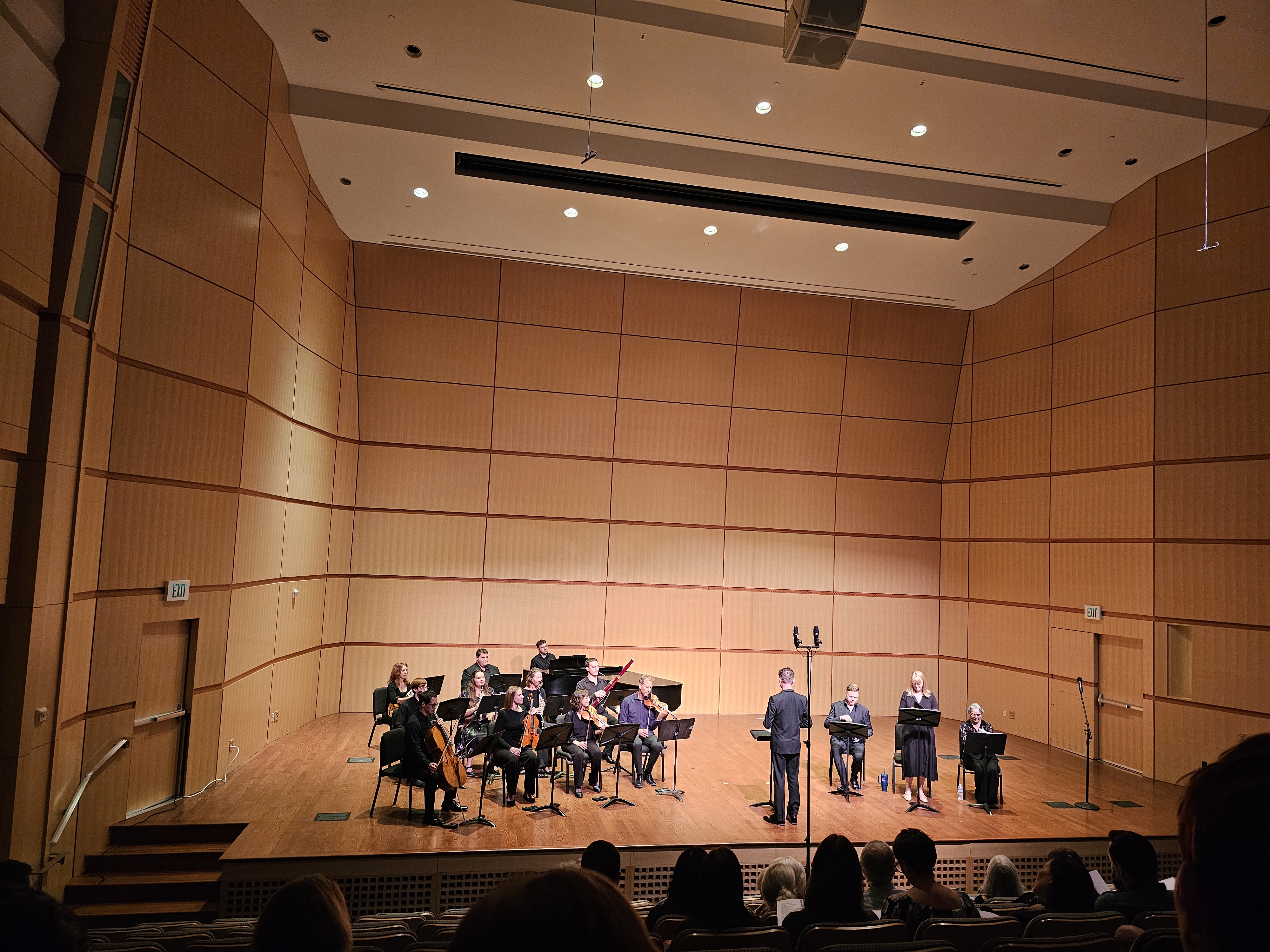
This premiere assembled 15 artists on stage, a record number for the Intermezzo Chamber Concert Series. Soprano Emily Nelson and tenor Christopher Puckett exhibited great chemistry in singing the roles of Miriam and Walter. Nelson executed crystal clear high notes and a warm middle range. Similarly, Puckett sang with very clear diction and demonstrated great emotional connection to the character that effectively told the story. Cheryl Hart, mezzo soprano, brought a warm, mellow tone to her interpretation of Mandy that communicated her character’s wisdom. Hart’s rich tone complemented Nelson’s clear, high notes nicely. Conductor Jared Oaks led an ensemble in performing the music that accompanied the vocalists: Hasse Borup (violin), Lynn Rosen (violin), Erin Kipp (viola), Louis-Philippe Robillard (cello), David Bennett (flute), Abigail McMullen (oboe), Erin Voellinger (clarinet), Ronn Hall (bassoon), Braden Eddington (trumpet), Anita Miller (French horn), and Ian Wagman (piano). I had been familiar with Jared Oaks from his work with Ballet West, but this was the first time I was able to see him conduct, and I enjoyed his conducting style. The dissonant accompaniment is in minor key that accurately reflects the discord in the characters’ relationship, and the music moves forward with a series of slightly pulsing, impressionistic phrases that I really liked. Hasse Borup on the violin and Ian Wagman at the piano stood out for their passionate playing of their phrases. As a chamber opera, this was a smaller production performed “concert style.” As an avid opera fan, I would welcome seeing the piece expanded into a fuller production with sets and the storyline acted out.
Intermezzo Chamber Music Series continues with concerts on the following Monday evenings, all at 7:30 p.m. in the Vieve Gore Concert Hall on the campus of Westminster University:
- Monday, July 14, 2025 – music by Strauss, Brahms, and Webern
- Monday, July 21, 2025 – music by Puccini, Haydn, and Brahms
- Monday, August 4, 2025 – music by Brahms
Click here for information and tickets. I wholeheartedly encourage adding an Intermezzo concert or two to your summer plans because doing so always becomes a memorable summer highlight.
 The Good Life
Leave a comment