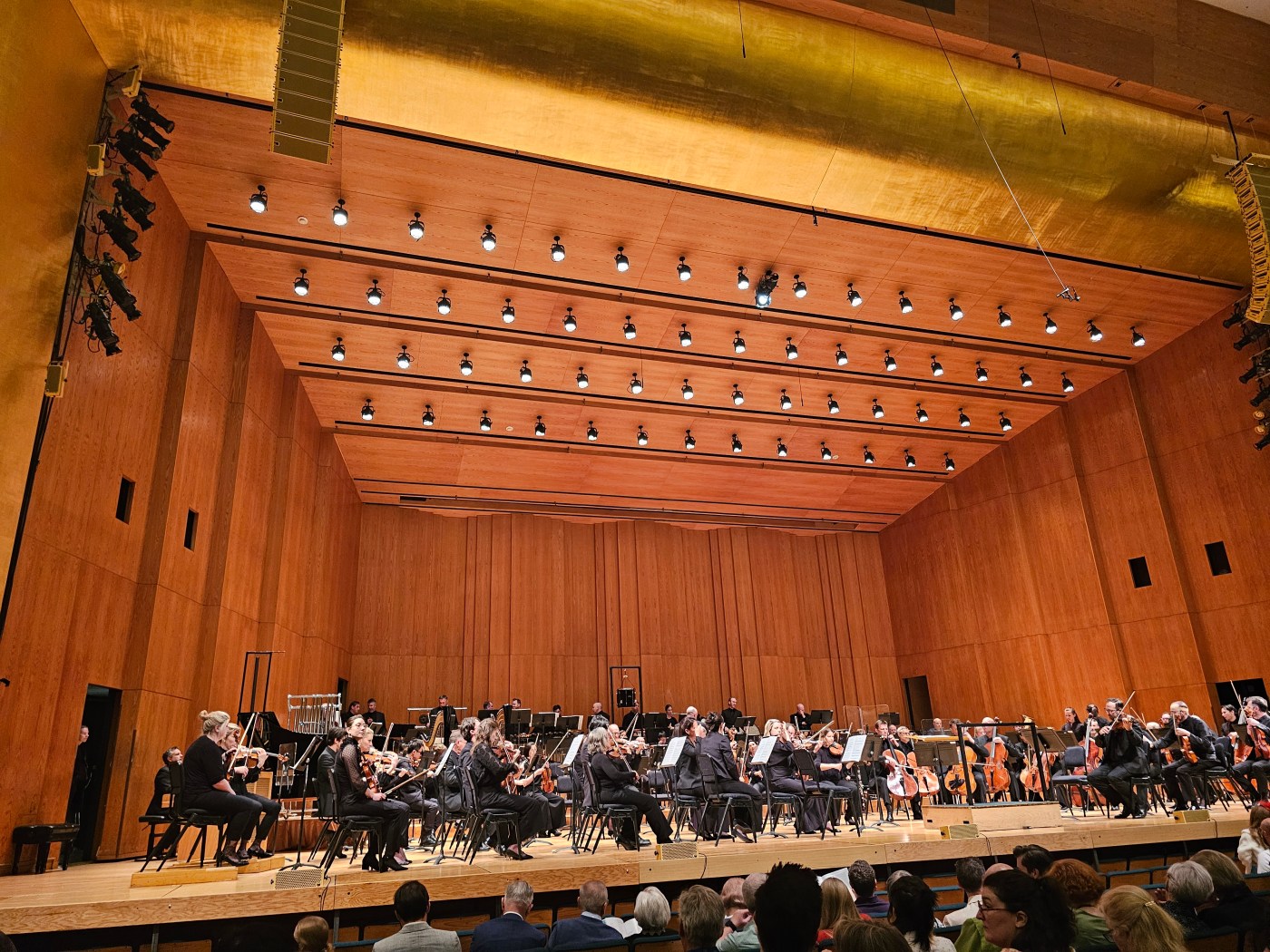


The Utah Symphony finished its regular season this Thursday and Friday with violin soloist Clara-Jumi Kang playing Erich Wolfgang Korngold’s Violin Concerto in D major, Op. 35 under the direction of conductor emeritus Thierry Fischer. That was enough to motivate me to purchase a ticket for Thursday evening’s performance because this violin concerto is incredibly stirring, and I have always loved Thierry Fischer’s conducting style. These performances coincided with the Utah Symphony’s hosting the League of American Orchestras’ annual conference, so the symphony created a program to emphasize the musicians’ abilities with diverse contemporary works. Music by Silvestre Revueltas (1899-1940), Gabriela Ortiz (b. 1964), and Edgard Varèse (1883-1965) completed the program.
Korngold’s Concerto for Violin and Orchestra in D Major, Op. 35 is a thoroughly captivating composition that evokes a wide range of sentiments and demonstrates virtuosic technical skill on the part of the soloist and the orchestra. The piece is characterized by expressive, soaring melodies reminiscent of Korngold’s movie scores; a dynamic dialogue between the soloist and the orchestra; rapid passages that demand precision and agility; and opportunities to showcase the violin’s unique capabilities, particularly in the upper register that take the soloist’s hand to the highest end of the fingerboard. The first movement, Moderato nobile, beautifully blends intense passion and energy with tender lyricism. The second movement, Romanze, highlights a gentle, ethereal melody. The final movement, Allegro assai vivace, distinguishes itself from the first two by being energetic and lively. Clara-Jumi Kang’s delivered an artistically and technically superb performance that was noticeably attuned to the varied emotions throughout the piece; her instrument was an extension of herself. She also looked absolutely stunning in a floor-length black dress with a sheer overlay embellished with gold sequins that resembled fireworks. The Utah Symphony accompanied her well, matching her pacing and energy in each of the movements.
The rest of the program included Noche de encantamiento (“Night of Enchantment”) by Silvestre Revueltas, Téenek – Invenciones de Territorio by Gabriela Ortiz, and Amériques by Edgard Varèse. Of these, I really enjoyed Noche de encantamiento (“Night of Enchantment”) and Invenciones de Territorio. Noche de encantamiento (“Night of Enchantment”) derives from a longer film score — La noche de los mayas — and is intended to depict Mayan sacrificial rites. The piece showcases the percussion section playing a variety of instruments and rhythms. I counted ten percussionists, and they absolutely LOVED having a moment to shine, inserting behind-the-back tricks while playing their parts. The emphasis on percussion made this piece really interesting to listening to. The rest of the orchestra followed the percussionists’ lead with complementary moving passages. Téenek – Invenciones de Territorio is a dynamic piece that stood out for its use of varied syncopated rhythms.
Although the Utah Symphony’s regular season has ended, the symphony continues to engage audiences during the summer with a variety of concerts, a few of which are free to the public. Click here for more information.



 The Good Life
Leave a comment