
Thirteen operatic soloists singing together as an ensemble, no additional chorus. Over forty African American spirituals newly arranged and carefully ordered into a narrative, some a cappella and some with accompaniment. Spoken monologues in a variety of dialects delivered with resonance and diction akin to Shakespearean soliloquies. The story of Fisk University’s Jubilee Singers whose concert tours funded the university’s first permanent building and kept the institution solvent. The prejudice and adversity that accompanied the Jubilee Singers’ efforts. The victory and legacy their striving accomplished. Original orchestration that weaves the pieces into a cohesive whole. These are the elements that make Jubilee a phenomenal new opera, and Seattle Opera has had the honor of staging its world premiere. I learned about Jubilee earlier this year, and I eagerly awaited an opportunity to see it last weekend.
Creator and director Tazewell Thompson, also known for his opera Blue, knew that he wanted to create an opera around spirituals. His music mentor at St. Dominic’s Convent in Blauvelt, New York, Sister Benvenuta, introduced him to opera, spirituals, and the Fisk Jubilee Singers. She urged him to continue learning about “this astonishing group” who had “created music in [his] image” and inspired the work of some of her favorite composers. Thompson immersed himself in learning about spirituals, connected that experience to the blues and jazz influences of his parents, and became intrigued by the Fisk Jubilee Singers.
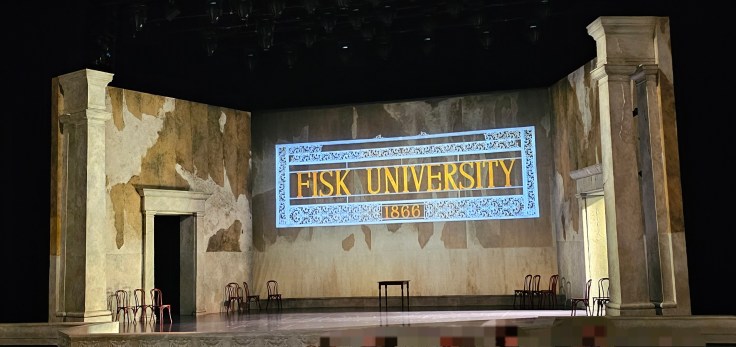
Fisk Free Colored School was founded in 1866 (incorporated as Fisk University in 1867) on the grounds of a former Union Army hospital in Nashville, Tennesee, endeavoring to educate recently emancipated individuals of all ages and believing that, as Tazewell Thompson noted, “education was the path to real power and individual personhood.” By 1871, Fisk University faced bankruptcy and risked having to close. George L. White, a white Northern missionary who became Fisk’s treasurer and self-appointed choir director, conceived a plan to have a group of singers from the university arrange traditional music (spirituals) and perform concerts across the United States and abroad, the proceeds of which would fund the university’s work. The group took the name Jubilee Singers, referencing Leviticus 25:10 and the Jewish year of Jubilee: “And ye shall hallow the fiftieth year, and proclaim liberty throughout all the land unto all the inhabitants thereof; it shall be a jubilee unto you…” Performing spirituals to a wide audience was a groundbreaking, radical, and vulnerable move because prior to this, they had been field songs, sung privately by enslaved people. The sacred songs dealt intimately with a dark past and were not intended to be performed publicly. White audiences attending the Jubilee Singers’ concerts expected a minstrel show, a caricature of African Americans steeped in degrading stereotypes. Audiences received the antithesis of a minstrel show, however, and spirituals became respected concert repertory. Fisk University and the Jubilee Singers survived their difficult early years, and the institution developed into a leading liberal arts university. This is the story that Jubilee beautifully conveys.
Bringing this work to the stage began with Arena Stage in Washington D.C. commissioning Thompson to write a play. He responded by creating an a cappella musical version of Jubilee, which enjoyed an extended run at the theater. He subsequently contacted Seattle Opera’s general director Christina Scheppelmann who immediately caught the vision of expanding and staging the work as an opera. The opera follows 13 members of the Fisk Jubilee Singers through preparing to perform, residing in an old army barracks, tilling their meager vegetable garden, uncovering slavers’ tools under the garden (chains, manacles, shackles, harnesses, iron masks, and mouth muzzles), selling these instruments of bondage to buy Bibles and spellers, performing for high society ladies hoping to generate revenue, enduring white mob attacks, giving a command performance for Queen Victoria in England, imagining a future that includes the Apollo Theater and a contemporary church (venues that house music genres derived from the original spirituals), and celebrating the release of their first recording.
Jubilee captivated me from the first notes of the overture. Similar to Aaron Copland’s music, the overture sounds distinctly American, weaves together different styles, and evokes images of life in previous eras. It is a sublimely beautiful piece of music on its own.
Jubilee is a drama, but not a tragedy. Unlike many operatic and literary storylines, character flaws and their terrible repercussions do not drive the action. Instead, the shared noble objective of securing an education for themselves and their peers propels the 13 Jubilee Singers to move primarily as one body and sing as one voice. There are some moments of dissension in the ranks — desiring the limelight as a soloist vs. participating with the group — but overall, they act as one. Adversity comes from outside rather than within. Themes of faith, perseverance, and triumph permeate the work and create a sense of joy while watching it.
Conveying the story of an ensemble creates a distinct casting dynamic different from other operas. Operas typically have a small number of soloists portraying leading characters and a chorus providing support. In the case of Jubilee, telling the story of 13 members of an ensemble requires bringing together 13 soloist-level artists to sing the music. Seattle Opera’s cast, some of whom appeared in the original musical, blend their voices incredibly well and create an impeccable, pristine sound. They resemble “one voice” with all of the nuances of a note or chord resonating in harmony. It is a transcendent listening experience.
Operas are typically sung-through without any spoken parts. Jubilee differs in this respect as well, providing several incredible monologues that either give backstory or move the narrative forward. Lisa Arrindell in the role of Ella Sheppard, the Jubilee Singers’ music arranger and assistant conductor, delivers phenomenal spoken monologues with powerful projection of her voice, deliberate enunciation of consonants, and nuanced emotional expression. Her character also acts as a narrator who gives additional detail at certain plot points. In this capacity, Arrindell expertly changes her voice to convey a different character’s point of view of the situation. Arrindell’s performance is among the best dramatic interpretation I have seen in live theater. Brava!!
Thompson precisely ordered the spirituals to coincide with specific plot developments in the Jubilee Singers’ story, making each scene a beautiful vignette. Spirituals are inherently allegorical, carrying multiple layers of meaning that include the Biblical motif being sung and enslaved people’s yearning for deliverance. Jubilee connects those layers of meaning to the Jubilee Singers’ personal stories and striving to further liberate themselves through higher education. The opera includes a particularly impactful vignette set to “Wade in the Water.” Interspersed between lines of the spiritual, each female character delivers an autobiographical monologue that uses water as a significant personal symbol. I absolutely loved this scene and found it to be particularly powerful and moving, giving me chills and triggering some tears.
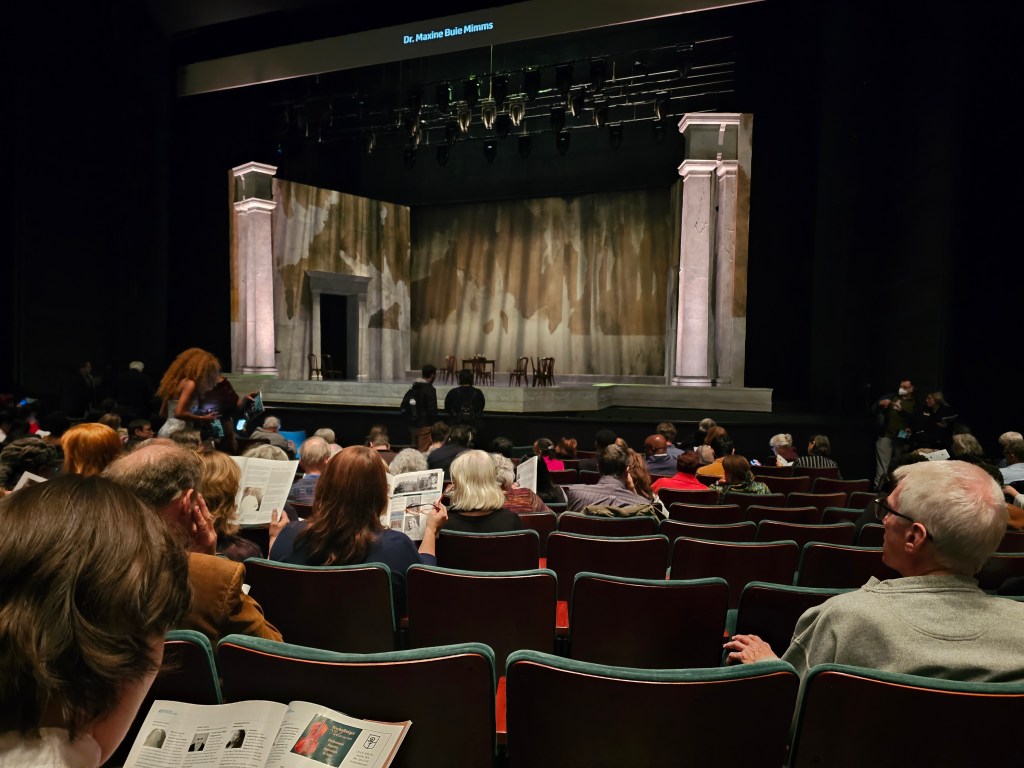
Regal costumes and functional sets complete the vision that is Seattle Opera’s production of Jubilee. Rich hues of blue, purple, and brown tailored in 19th-century fashion create a beautiful image of the time period. The basic set is a structure that suggests the buildings where the Jubilee Singers rehearse and perform. Images projected on the structure indicate changing locations and the passage of time. It is simple, but effective.
Jubilee runs at Seattle Opera through Saturday, October 26, 2024. Click here to learn more, giving particular attention to the Digital Program which contains a wealth of information. Information quoted in this review comes from the Digital Program. I look forward to seeing which opera houses stage Jubilee in the future. I hope that Utah Opera will be among them.

 The Good Life