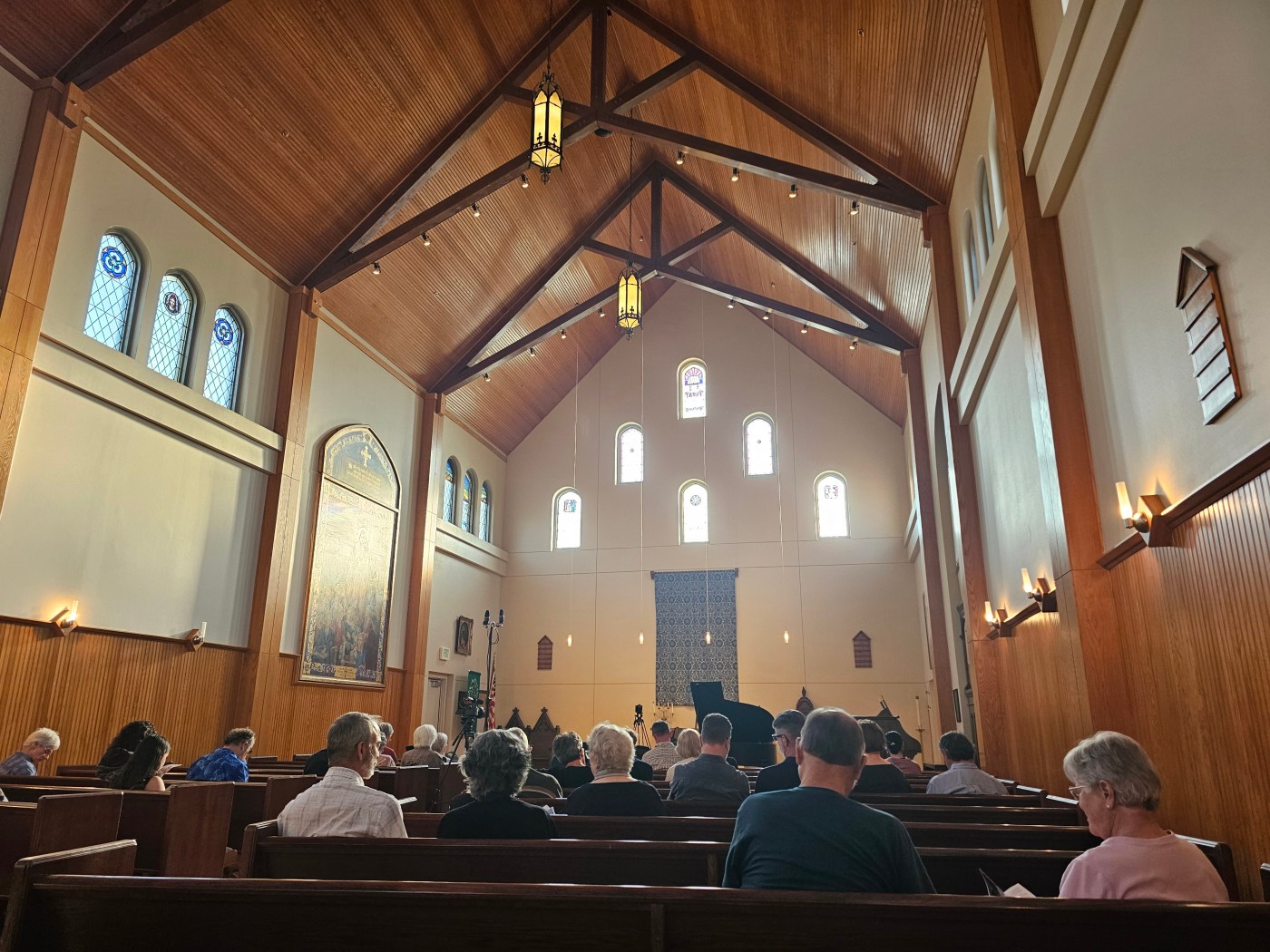
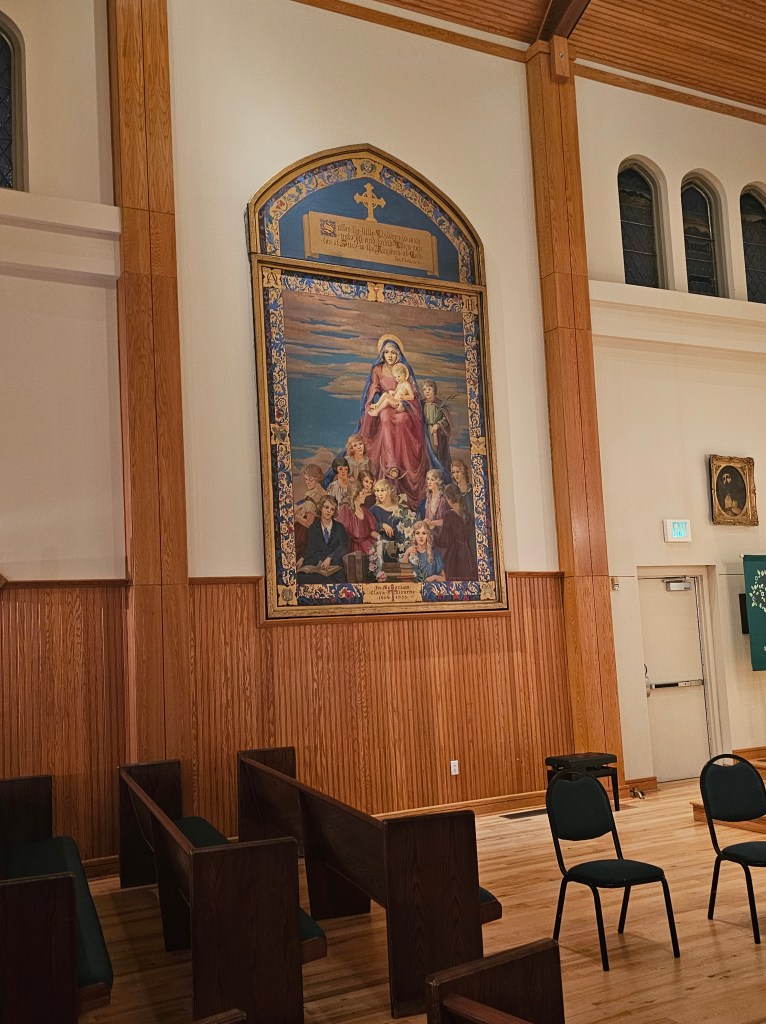
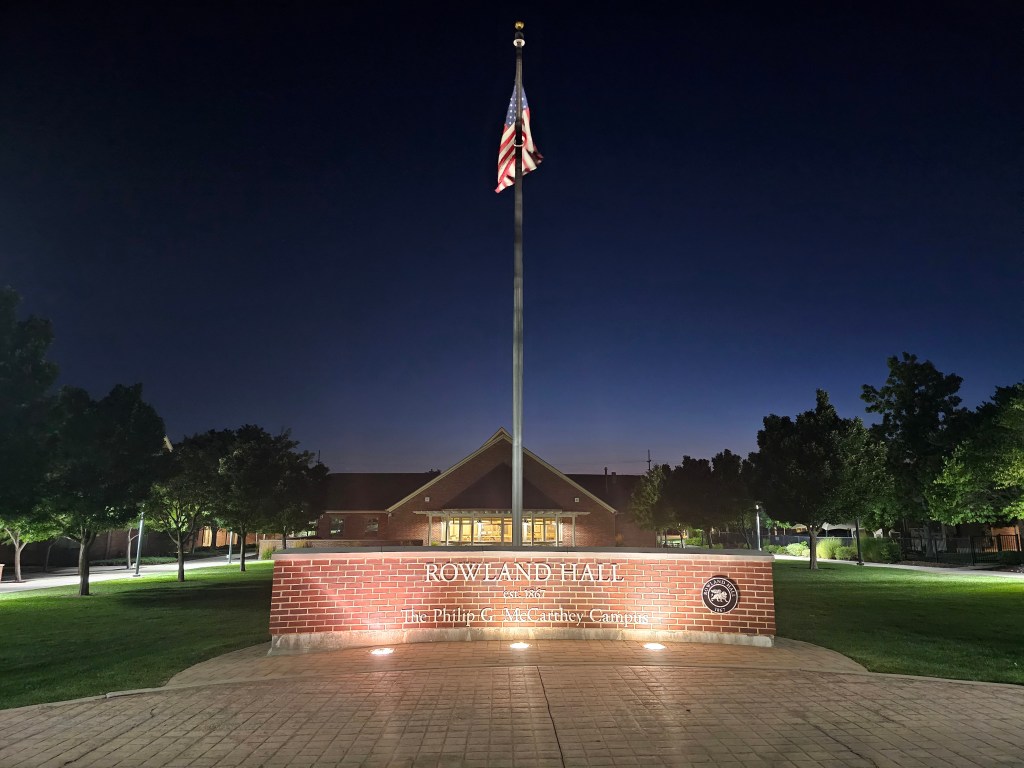
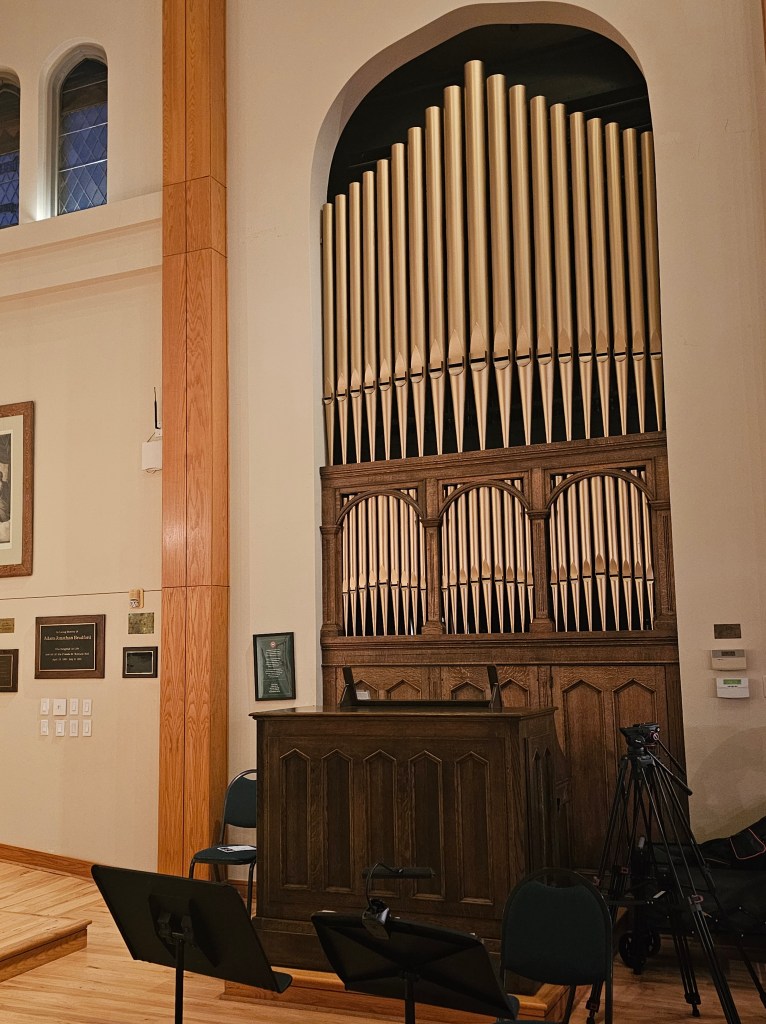
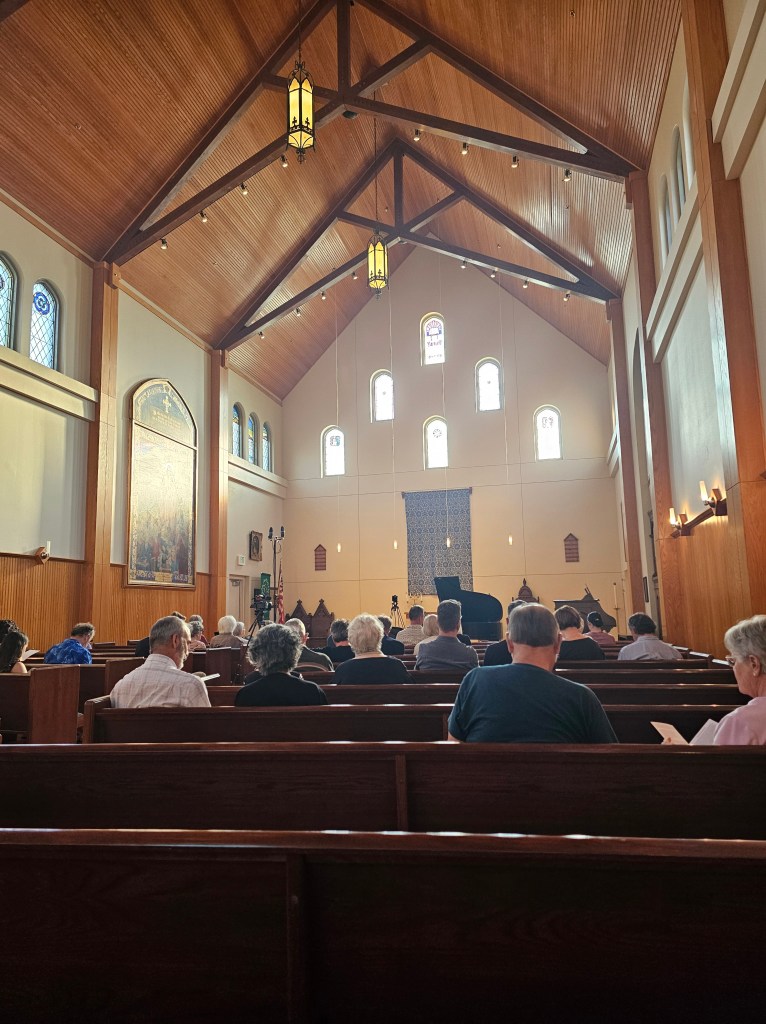
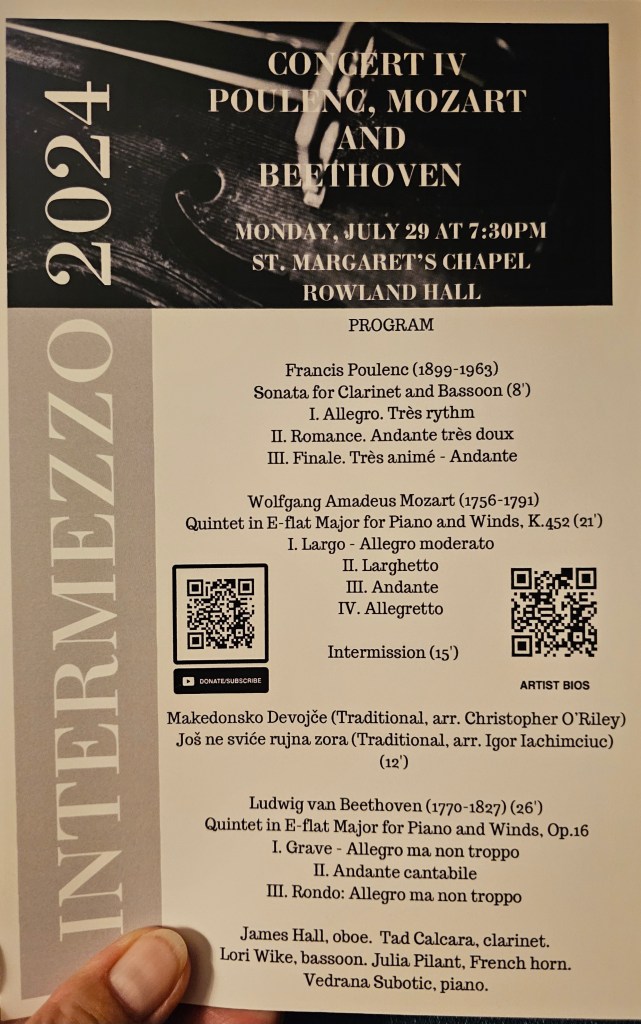
Attending Intermezzo Chamber Music concerts is one of the highlights of the summer for me. I had to miss several concerts in this summer’s series due to other commitments, so I was thrilled to attend Concert IV on July 29, 2024 and Concert V on August 12, 2024. The Intermezzo Chamber Music Series has usually taken place at the Vieve Gore Concert Hall on the campus of Westminster College in Salt Lake City, but this summer, the series relocated to the Libby Gardner Concert Hall on the University of Utah Campus and St. Margaret’s Chapel at Rowland Hall. Concert IV at St. Margaret’s Chapel presented fantastic music for piano, woodwinds, and brass. Utah Symphony artists James Hall (oboe), Tad Calcara (clarinet), Lori Wike (bassoon), and Julia Pilant (French horn) joined Intermezzo’s Artistic Director and pianist Vedrana Subotic in presenting the evening’s program.
The program began with Calcara and Wike performing Francis Poulenc’s Sonata for Clarinet and Bassoon, a three-movement piece that is playful, sweet, and contemplative. The first movement, Allegro. Très rythmé, is a short, whimsical exchange between the two instruments. The second movement, Romance. Andante très doux, contrasts with the first in that it is slower and smoother, inviting reflection as the two instruments play in sync with each other. The third movement, Très animé – Andante, begins and ends with cheerful, fast-moving passages that showcase the clarinet, connected by a more subdued legato section that seems to have the two instruments responding to each other. Calcara and Wike played beautifully in sync with each other, and I really enjoyed the lighthearted mood throughout the sonata.
The second piece on the program featured all five of the evening’s musicians performing Wolfgang Amadeus Mozart’s three-movement Quintet in E-flat Major for Piano and Winds, K. 452. In this piece, Mozart created a sound similar to the duets in his operas, allowing the instruments to intertwine and play off each other. Gentle chords, interspersed with unhurried melodies define the beginning of the first movement, Largo – Allegro moderato. The movement then takes off with light, crisp, accelerated passages, which create a bright, joyful quality that I loved. The larghetto second movement creates quiet intensity with smooth, subtle melodies. This section of the piece has a meditative quality that I found very relaxing. The piece finishes with an effervescent third movement, Rondo. Allegretto, that demands fast-paced precision, particularly from the piano. I loved the delicate quickness of this concluding movement.
After intermission, Vedrana Subotic explained that she has desired to create a professional recording of her piano music, but she also wanted to do something that hasn’t been done before. With that in mind, she has delved into her cultural background and commissioned piano arrangements of several Balkan folk songs. She shared two of these pieces at this concert: “Makedonsko devojče” (“Macedonian Girl”), composed by Jonče Hristovski in 1964 and arranged by Christopher O’Riley; and “Još Ne Sviće Rujna Zora,” arranged by Igor Iachimciuc. “Makedonsko devojče” (“Macedonian Girl”) is an homage to traditional Macedonian folk music that has passed from one generation to the next at community social gatherings. The song’s rhythmic structure gives it an identifiable lilt that is typical of traditional Balkan music. I loved this slight syncopation in the piece. The second folk song, “Još Ne Sviće Rujna Zora,” is a Montenegrin mourning song whose austere harmonic and structural components allow room for each performer’s personal interpretation. Subotic’s beautiful performance communicated both passion and mysterious melancholy.
All five musicians reunited to perform the final piece of the evening, Ludwig van Beethoven’s three-movement Quintet in E-flat Major for Piano and Winds, Op. 16. The first movement, Grave – Allegro ma non troppo, opens with dramatic chords followed by a flowing melody. Intensity builds as the movement weaves together staccato notes, chords, and fast-moving passages that highlight each instrument in turn and in harmony. The mood changes in the second movement, Andante cantabile, as a thoroughly legato melody crescendoes, swells, and diminishes in alternating turns. This movement stays true to its cantabile description because it beautifully sings throughout, conveying tenderness and romance. The final movement, Rondo – Allegro non troppo, alternates a sweet, lilting melody with swift passages in which the piano and winds complement each other. All three movements of this piece left a lasting positive impression on me because the incredible musicians created a magnificent symphonic sound. I had to remind myself that I was listening to five people instead of a full orchestra. Bravo!
Summer may have ended, but Intermezzo Chamber Music continues its work, offering a fall concert series at Grand America and Libby Gardner Hall. Click here for information and tickets.


 The Good Life
Leave a comment