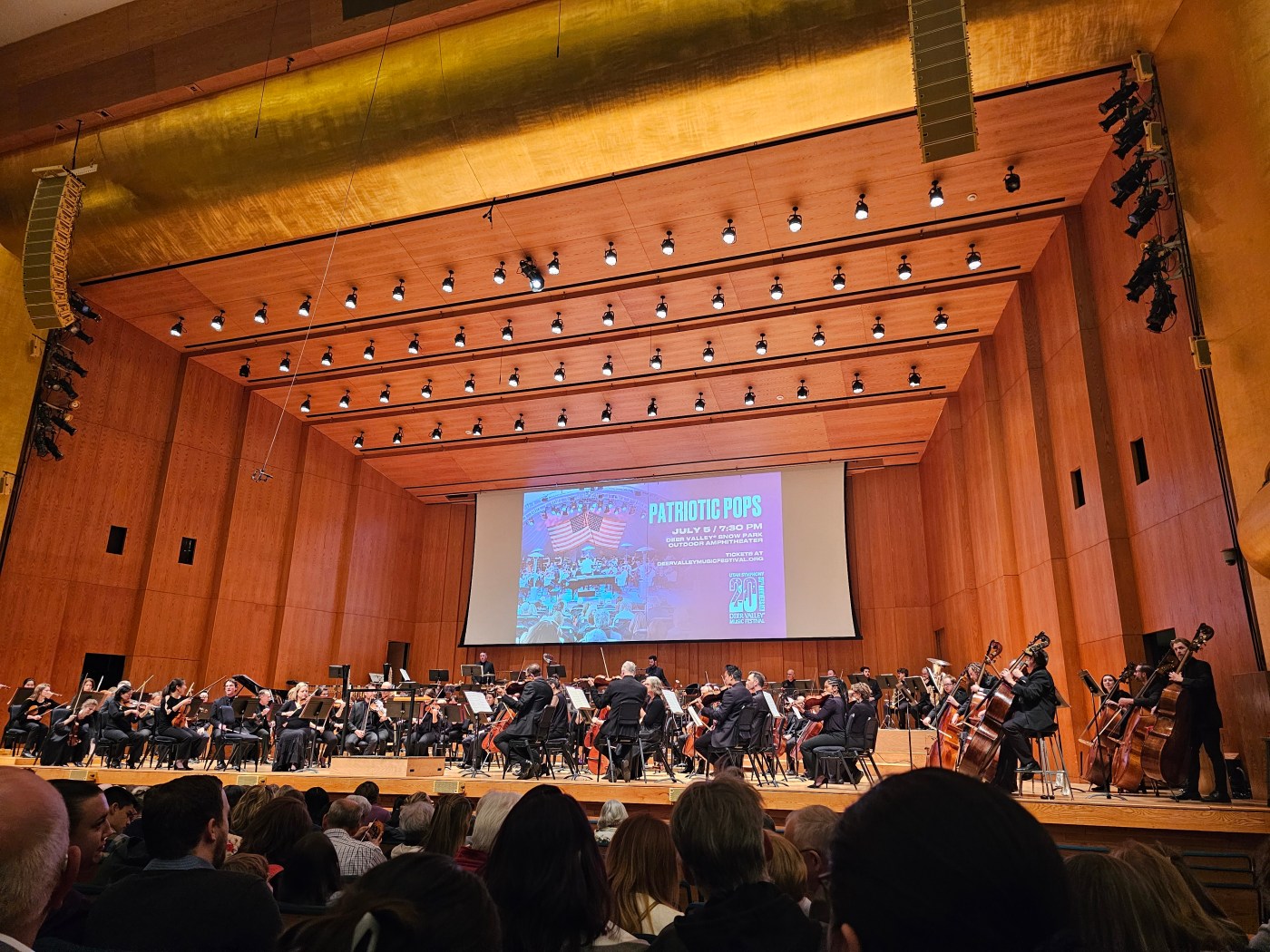
The Utah Symphony concluded its regular season this past weekend with a program featuring three contemporary works: Fanfare Ritmico by Jennifer Higdon, Fandango by Arturo Márquez, and Symphony No. 3 by Aaron Copland. Guest conductor Giancarlo Guerrero and violinist Anne Akiko Meyers joined the symphony for these concerts. I attended Friday evening’s performance, and I loved that the music seemed accessible and easy to appreciate without having to think too hard. It was perfect entertainment on the heels of finishing a stressful school year and transitioning to a more relaxed summer schedule.
The program began with Jennifer Higdon’s Fanfare Ritmico, which the composer describes as “celebrat[ing] the rhythm and speed (tempo) of life … reflecting on how all things have quickened as time has progressed.” The piece starts with the snare drums and timpani beating out a clear rhythm, soon joined by additional percussion, brass, woodwinds, and strings. As it progresses, the piece incorporates a variety of postmodern sounds, rhythms, and melodies that accurately convey the chaos and heightened urgency of life in the twenty-first century. Since I love and usually prefer traditional, classical compositions, pieces such as this walk a fine line between being noise and music. Fanfare Ritmico is a bit of a cacophony, but it kept me on the edge of my seat, intrigued to hear which rhythm or melody would happen next.
The program continued with Fandango by Mexican composer Arturo Márquez, a violin concerto that Anne Akiko Meyers commissioned in 2018 and first performed in 2021. Meyers had fallen in love with some of Marquez’s earlier music, so she contacted him, asking if he would consider composing a mariachi-inspired concerto. The request delighted the composer who had attempted unsuccessfully to write a concerto based on the Mexican Fandango 20 years earlier. Fandango is a popular Spanish dance and one of the components of flamenco. Marquez brought together and developed ideas that had fascinated him for two decades and that he knew would showcase Meyers’ musicality and virtuosity. The result is a dynamic three-movement piece that weaves together intense broad notes, fast-moving staccato passages, and lighter sweet melodies. I absolutely loved this concerto, particularly aspects of the second and third movements, and Meyers’ incredible performance Friday night captured and sustained my attention throughout. Recordings of all three movements are available on YouTube and Spotify for those of you who would like to experience this amazing piece.
- I. “Folia Tropical” – This movement is rich with contrasts. It opens with heavy low notes that attack and dig into the strings. A slightly plaintive melody emerges complemented by a syncopated orchestral accompaniment. Fast-moving passages covering the full range of the violin’s scale then alternate with a sweet, contemplative melody in the woodwinds and a tender violin melody higher on the strings. The movement teases a bouncy, lilting rhythm that culminates in a dramatic finish.
- II. “Plegaria” (Chacona) – This movement is a noticeable contrast to the first, being more romantic and delicate throughout. It begins with a light syncopated rhythm in the orchestra. The violin soloist joins with a gently paced, relaxed melody. A similar flute melody answers the violin. Momentum builds as the movement becomes more furious and fast-paced, ending with sweeping melodies shared by all of the sections in the orchestra. I loved the lightheartedness of this movement.
- III. “Fandanguito” – Drama returns in this movement. The soloist begins alone without orchestral accompaniment, playing intense, accented notes. The orchestra joins with a fast syncopated rhythm followed by flowing melodies. The soloist shines in accelerated passages moving up the violin, highlighting Meyers’ incredible finger work. The movement ends with a playful dance melody alternating between the orchestra and soloist. I loved this movement’s joyful, exhilarating qualities.
Aaron Copland’s Symphony No. 3, which incorporates his Fanfare for the Common Man in the fourth movement, rounded out the program. I love listening to Copland’s compositions because they sound distinctly American, evoking imagery of expansive landscapes and the frontier. In this performance, the very pristine, straightforward violin melodies, supported by the brass and woodwinds, impressed me the most. The fanfare in the fourth movement was triumphant.
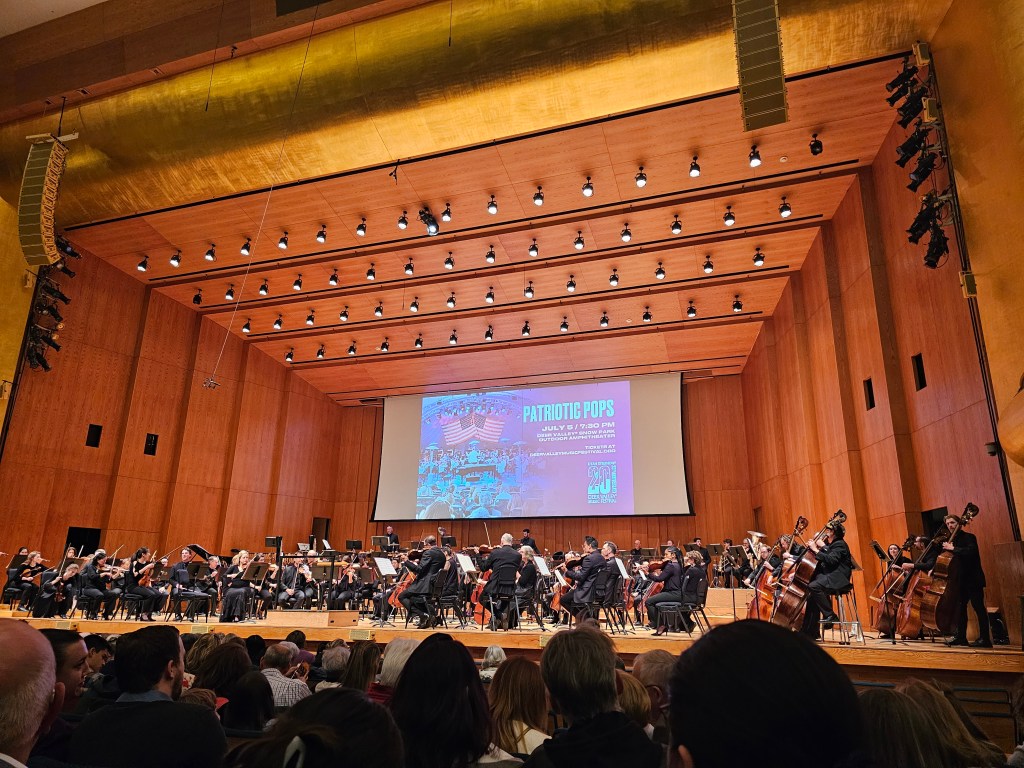

Where can you hear the Utah Symphony during the summer?
The Utah Symphony may have ended its regular season, but there are several opportunities to hear the orchestra perform during the summer.
- First, the symphony is providing a series of community concerts, most of which are free and do not require tickets. Plan to arrive early to have the best selection of seats.
- June 17 – Sandy Amphitheater
- June 25 – Thanksgiving Point (ticketed through Thanksgiving Point)
- June 26 – Utah Cultural Celebration Center
- July 1 – Gallivan Center
- Second, the symphony’s Deer Valley Music Festival begins on Friday, July 5, 2024. Click here for tickets and information.
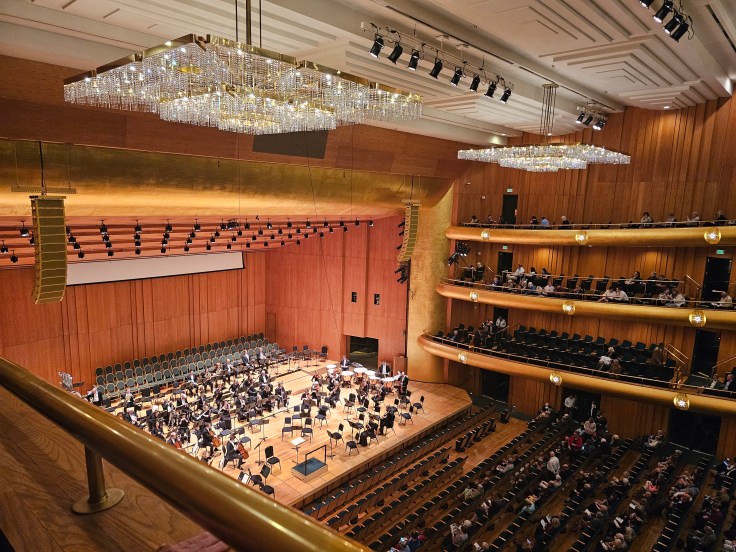
To show continued support for preserving Abravanel Hall, I compiled my best photographs from attending concerts over the last few years. You can view my compilation below.
 The Good Life
Leave a comment