Life became busy and took me in several different directions, keeping me from writing about the performing arts events I was attending. I am happy to be back writing about The Good Life, so let’s jump in!
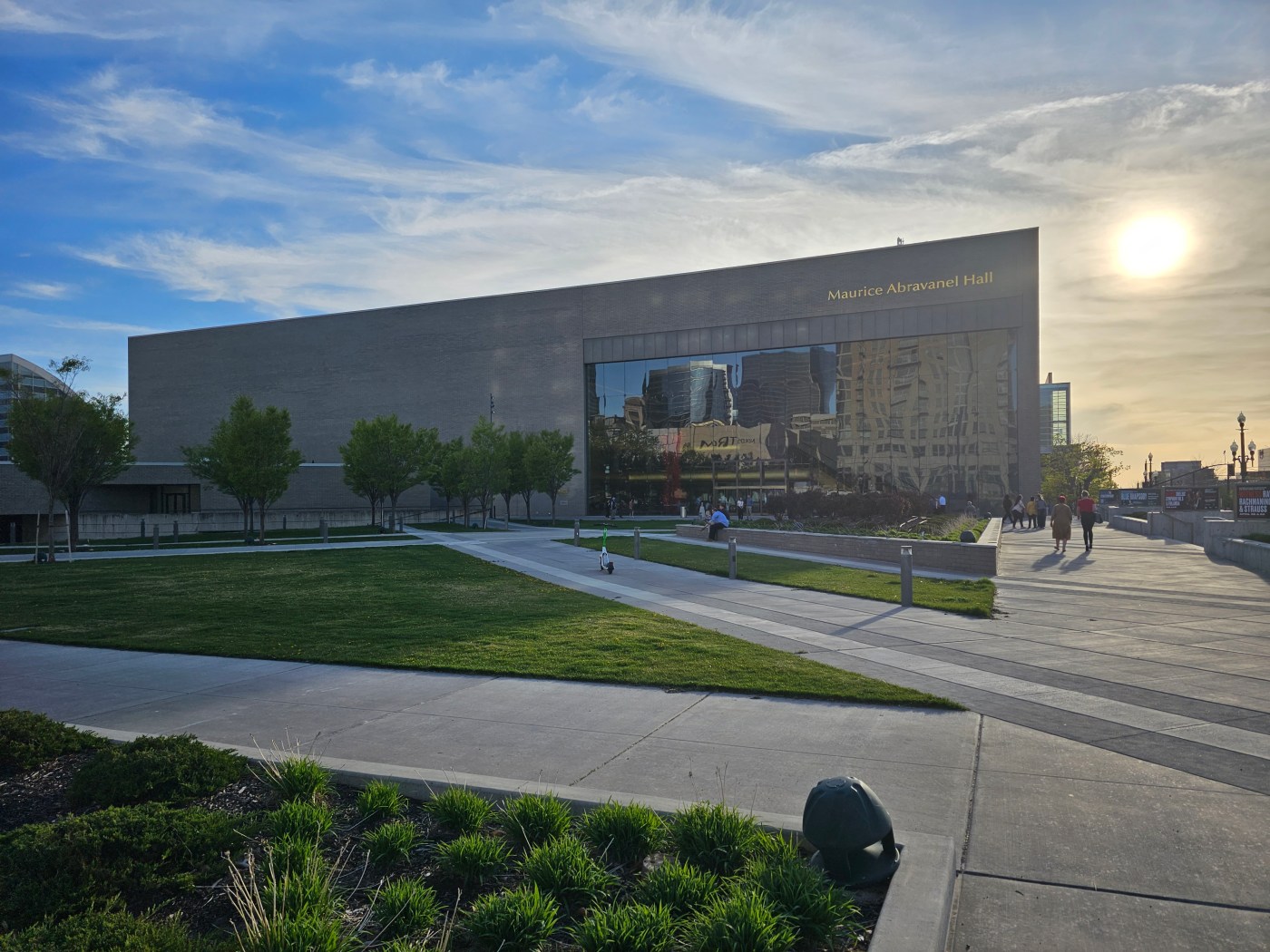
I decided on a whim to attend Saturday evening’s Utah Symphony concert, featuring two composers’ interpretations of Scheherazade. I haven’t attended as many Utah Symphony performances this season, so I wanted to partake of what remains before the regular season ends. I also wanted to show my support for the symphony’s exceptional venue, Abravanel Hall. The venue honors Maurice Abravanel, Utah Symphony’s Music Director from 1947-1979, who developed the organization from a part-time community orchestra into an esteemed professional ensemble. He also succeeded in establishing the symphony’s permanent home. Abravanel Hall currently finds itself in the cross hairs of a community discussion about how best to accommodate Salt Lake City’s expanding arts, entertainment, and sports scene. Some have suggested relocating and rebuilding the hall in a sports-arts complex closer to the current Delta Center, an idea that deeply troubles artists and patrons. This blog entry is as much a love letter to the existing Abravanel Hall, and a plea to improve it where it stands, as it is a review of Saturday evening’s performance.
Abravanel Hall holds a significant place in my life as a once-upon-a-time teenage violinist and as a current symphony patron. As a teenager, I was a member of the Granite Youth Symphony, and we were afforded opportunities to play side-by-side concerts with the Utah Symphony during my sophomore and senior years. Our directors trusted us to play substantial pieces such as George Gershwin’s Rhapsody in Blue, Samuel Barber’s Adagio for Strings, and Cesar Franck’s Symphony in D minor. Performing those works alongside professionals under the baton of Maestro Joseph Silverstein (Music Director 1983-1998) in Abravanel Hall created core memories that solidified my love of the arts. The arts matter because they edify the minds and souls of individuals and communities. I have returned to Abravanel Hall many times since then, and I always look forward to being in the building as much as hearing the Utah Symphony perform. I acknowledge that the venue may benefit from upgrades and expansion to function more smoothly, but the building’s design and decor are art unto themselves, part of what edifies the patrons who visit. Interesting angles, diagonal lines, gold-leafed balconies, crystal chandeliers, views of South Temple, and a fiery red Chihuly sculpture elevate the experience of listening to orchestral music in the concert hall. Artists and technicians may disagree, but as a patron who has sat in multiple places around the hall, the building’s acoustics beautifully amplify the symphony’s performances. The building’s aesthetics, acoustics, and worthwhile connections to the past provide solid reasons to invest in preserving Abravanel Hall in its current location rather than demolishing and relocating it. Progress should not mean tearing down and cutting ties with the past because the past informs how we have become who we are. Eliminating the structures that have housed us, particularly when they have artistic merit of their own, disorients and damages our collective mind and soul. I say all of that to say: let’s find a way to preserve Abravanel Hall in its current location. We owe it to those who brought us to this moment and gave us the opportunity to even envision a future with noteworthy performing arts organizations in Salt Lake City.
Saturday evening’s program, performance, and audience response, while most likely not intentionally scheduled as such, seemed to be fitting expressions of the passion the community feels for Abravanel Hall and the Utah Symphony. Guest conductor Delyana Lazarova took the podium and led the orchestra in deeply stirring renditions of contemporary composer Dobrinka Tabakova’s Orpheus’ Comet, Maurice Ravel’s Shéhérazade, and Nikolai Rimsky-Korsakov’s Scheherazade, Op. 35. Lazarova brought vitality to her conducting that evoked the proper energy of each piece and resonated with the audience.
Tabakova’s Orpheus’ Comet set the tone for an energetic evening as it is a fast-paced, forward-moving piece intended to mimic the sound of buzzing bees. The composer took her inspiration from one of the earliest mentions of the Orpheus legend, Virgil’s Georgics, which are books about agriculture, the fourth of which describes the life of bees in great detail. That motif stayed with the composer, and she worked it into a musical pattern where the buzzing begins with the horns, moves around the orchestra, evolves into a chorale featuring the strings, and culminates in a woodwind melody supported by the trombones. An urgent sense of movement toward a destination, of something being in flight, made the piece intriguing to listen to.
Next, soprano Wendy Bryn Harmer joined the orchestra to perform Maurice Ravel’s Shéhérazade, a three-movement song cycle based on the poetry of Tristan Klingsor and the Middle Eastern folktales The Thousand and One Nights (Arabian Nights). The three movements include Asie (Asia), which presents stereotypical Eastern exoticism as an antidote to boredom; La flute enchantée (The Enchanted Flute), which depicts a young slave girl listening to her lover playing his flute just beyond the walls of her captivity; and L’indifférent (The Indifferent One), which explores youthful beauty and passion. The piece overall is incredibly dynamic, conveying both rich intensity and delicate clarity. Harmer delivered an exquisite performance with remarkable pacing and phrasing that communicated the story effectively. Supertitles projected on a screen above the orchestra translated the original French into English. Harmer’s voice was powerful and resonant, but also gentle and clear on the high notes, and she projected her voice beautifully over the power of the orchestra.
The program concluded with Rimsky-Korsakov’s interpretation of Scheherazade. In the composer’s own words, the piece musically illustrates the following scene over the course of four movements: “The Sultan Shahriar, convinced of the falseness and faithlessness of all women, vowed to slay each of his wives after their first night with him. But the Sultana Scheherazade saved her life by arousing his interest in tales which she told him over one thousand and one nights. Driven by curiosity, the Sultan put off her execution from day to day, and at last gave up his bloody resolution altogether.” Furious orchestral passages, representing the Sultan, contrast with recurring delicate violin solos, representing Scheherazade. The violin solos — expertly played by concertmaster Madeline Adkins and at times accompanied by harp, flute, and cello — stood out as being my favorite parts of this piece.
A more exuberant-than-usual standing ovation, thunderous applause, cheers, and foot stomping immediately followed the orchestra’s final notes, communicating intense emotion that matched the passionate music of the evening. Locals love their symphony and its venue, and that showed in the emotional response to the evening’s performance. Once again, the Utah Symphony and Abravanel Hall edified the collective minds and souls of the community.
The Utah Symphony concludes its 2023-2024 regular season this weekend with Arturo Marquez’s violin concerto Fandango, Aaron Copland’s Symphony No. 3 (Fanfare for the Common Man), and Jennifer Higdon’s Fanfare Ritmico. Click here for tickets and more information.
Salt Lake County Mayor Jenny Wilson has expressed support for preserving Abravanel Hall where it is. If you are so inclined, click here to thank her for her support.
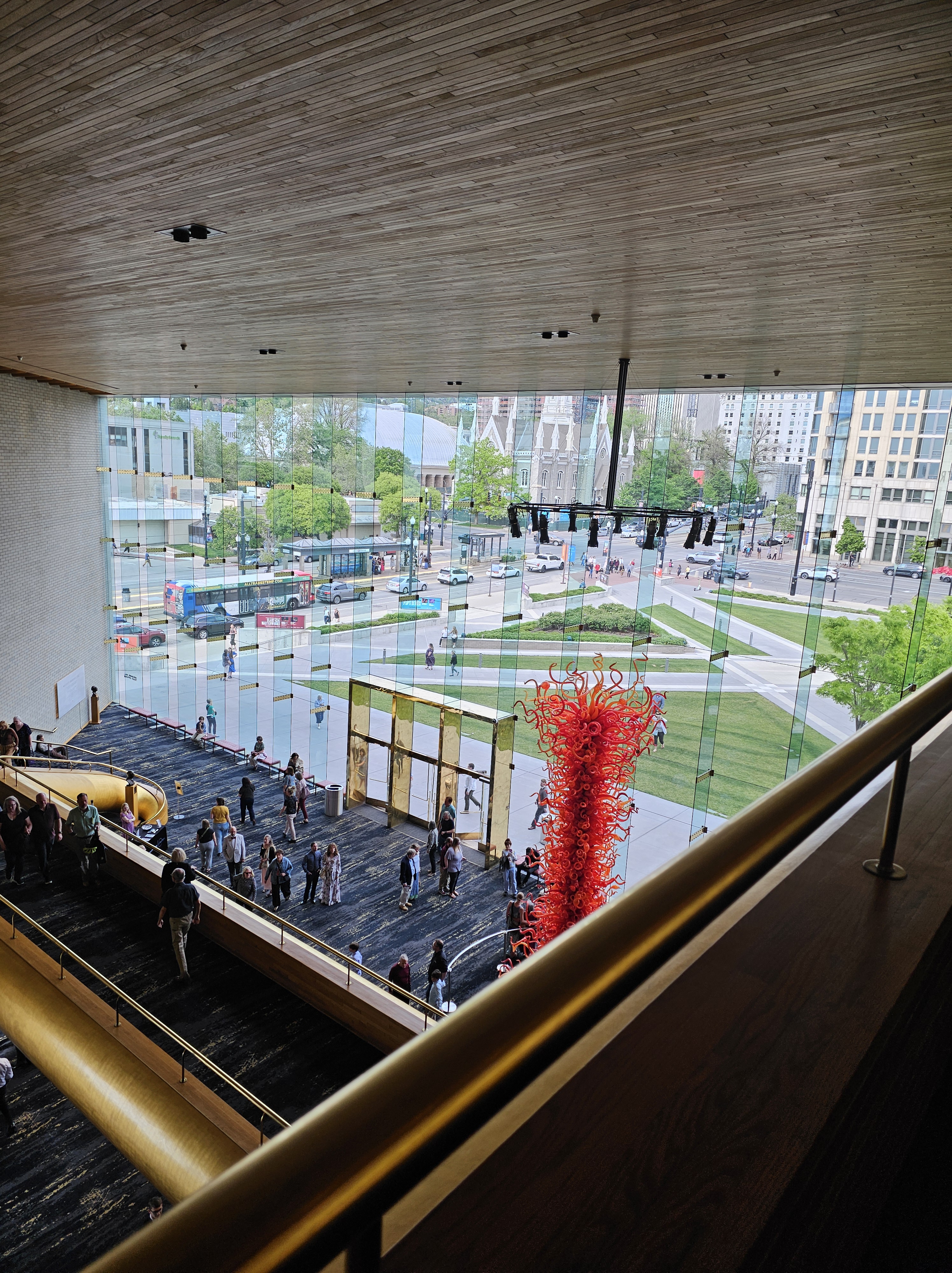

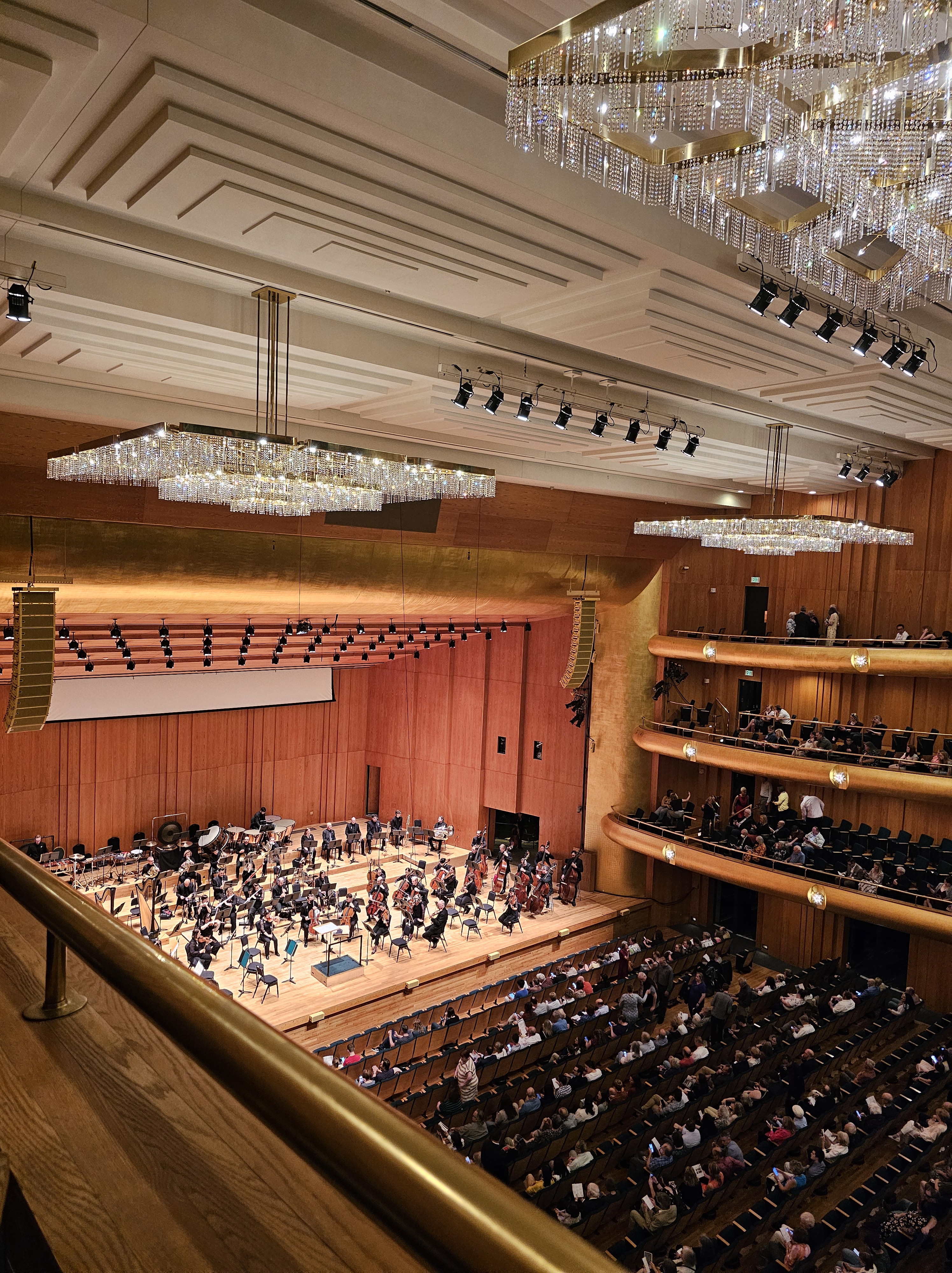

Revisit my blog entry from April 2023 that highlights Abravanel Hall’s exquisite features. This venue is a gem in Salt Lake City that has provided countless core memories for performers and patrons. While upgrades and expansion may be warranted, I hope to see our community invest in preserving it at its current location.
 The Good Life
Leave a comment