
When I think back to my favorite childhood activities, playing with Barbie dolls does not rise to the top of that list. I owned only one Barbie doll that a friend gave to me as a birthday gift. I appreciated my friend’s kindness, but truth be told, I never liked the actual doll. This particular Barbie had very straight blonde hair that always had more static than style, and she came in a simple, two-piece shorts and top outfit. She most likely was the 1979 Sun Lovin’ Malibu Barbie, if some quick internet research to refresh my fuzzy memory is correct. I never felt inspired to acquire more outfits for her or to collect any other Barbie dolls in general. I suspect that I didn’t particularly like Barbie because I didn’t relate to her: she presented female perfection as being slender, sun-kissed, and blonde while I was chubby, fair-skinned, and brunette. Thus, the Barbie Land of my childhood days remained barren as I more happily played with other toys and pursued other interests.
Fast forward to this summer when the highly anticipated Barbie movie hit theaters on Friday, July 21. I initially thought this was a movie I could skip given my previously described dislike of Barbie dolls and accessories. However, as hype for the movie increased, and after seeing a few of the trailers, I decided that this would be a movie worth seeing, purely as lighthearted entertainment. The movie met that expectation, and it also provided some worthwhile points to consider.
Dame Helen Mirren narrates the first scene of the film that depicts a seemingly prehistoric landscape with little girls playing with their baby dolls. A statuesque doll representing a full-grown woman enters the scene, and the little girls stare in awe. The statuesque doll is revealed to be wearing a chevron-striped bathing suit reminiscent of the original Barbie doll that Mattel released in 1959. Co-founder and former president of Mattel, Ruth Handler, modeled the original Barbie doll on a German doll named Lilli that she and her daughter Barbara had seen in a store window during a family vacation to Switzerland in 1956. Ruth observed that the Lilli doll captured her daughter Barbara’s attention because it was different from other toys available to her daughter up to that point: either baby dolls with which to rehearse motherhood or two-dimensional paper dolls with which to play dress-up. Lilli (although not intended to be a children’s toy) — and subsequently the 1959 Barbie — gave little girls a new vision of womanhood in which they could aspire to be “everything.” The little girls in the opening scene of the movie proceed to smash and destroy their baby dolls against the rocks. True, this moment suggests some troubling and unwholesome implications and interpretations which I will neither validate nor rationalize. However, what stood out for me at this point in the movie was that the advent of Barbie expanded little girls’ perspectives, options, and agency to create the life that they want instead of mindlessly falling into the roles that biology dictates. While wife and mother are fulfilling roles that no one should denigrate or cast aside, what else could a fully formed woman aspire to be?
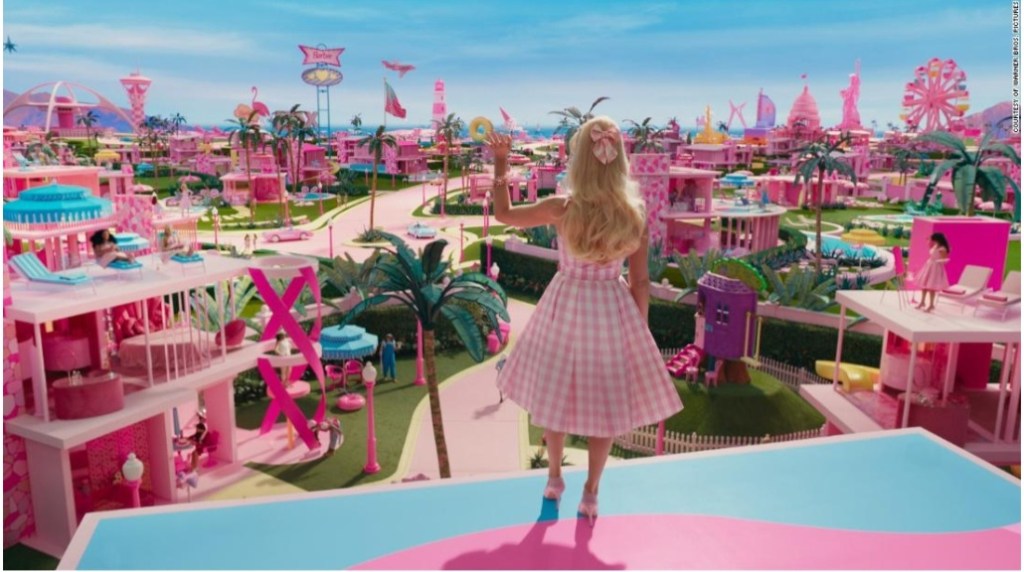
The movie continues with Stereotypical Barbie (Margot Robbie), along with several other Barbies who have achieved important careers, living a perfect day in Barbie Land. Stereotypical Ken (Ryan Gosling), along with several other Kens, engage in recreational activities at the beach. Ken strives for Barbie’s attention and is always at her mercy for personal validation. At a dance party later that night, Barbie experiences unusual thoughts about her own mortality. These thoughts, along with other strange occurrences, follow Barbie into the next day. Unsettled and unsure what to do, Barbie visits Weird Barbie (Kate McKinnon), a wise but disfigured Barbie, for advice. Weird Barbie instructs her to visit the Real World where she must find the child who plays with her to set things right. Barbie’s journey to the Real World is plagued by complications: Ken accompanies her, discovers the patriarchy, and revels in its benefits to him; Mattel CEO (Will Ferrell) pursues Barbie and attempts to put her back in the box; and child Sasha (Ariana Greenblatt) chastises Barbie for giving women unattainable beauty standards. Barbie eventually finds her way and determines her purpose with guidance from Sasha’s mother Gloria (America Ferrera) and Barbie’s creator Ruth Handler (Rhea Perlman).
The Barbie movie is flawed in that it portrays imbalanced gender roles and dysfunctional relationships between men and women. The female characters in Barbie Land stay on top by keeping the men down, supposedly the opposite dynamic of the patriarchy Ken and Barbie encounter in the Real World. Ken’s character undergoes some development, but his trajectory ends with his realizing the work he has yet to do to be fully actualized. The film doesn’t arrive at a society in which the scales have been balanced. However, that is not the story the film was striving to tell. This isn’t Ken’s story, after all. The movie’s strength is in its exploration of the complicated roles, choices, and expectations women have to navigate, often against the backdrop of harsh critiques. America Ferrera’s portrayal of Gloria speaks eloquently to this struggle, culminating in a poignant monologue that elicited the audience’s applause and tears at the showing I attended. I, too, applauded and cried. Margot Robbie’s performance successfully balances Barbie’s external beauty with her internal growth and awareness of the world around her. All of this unfolds in a carefully created set and costumes that pay homage to Barbie’s iconic looks and houses across the decades. It is a visually pleasing movie to watch.
I went into this movie intending to enjoy it but not take it too seriously. I definitely enjoyed it, and while it doesn’t answer all of society’s questions, it provides meaningful food for thought.
 The Good Life