
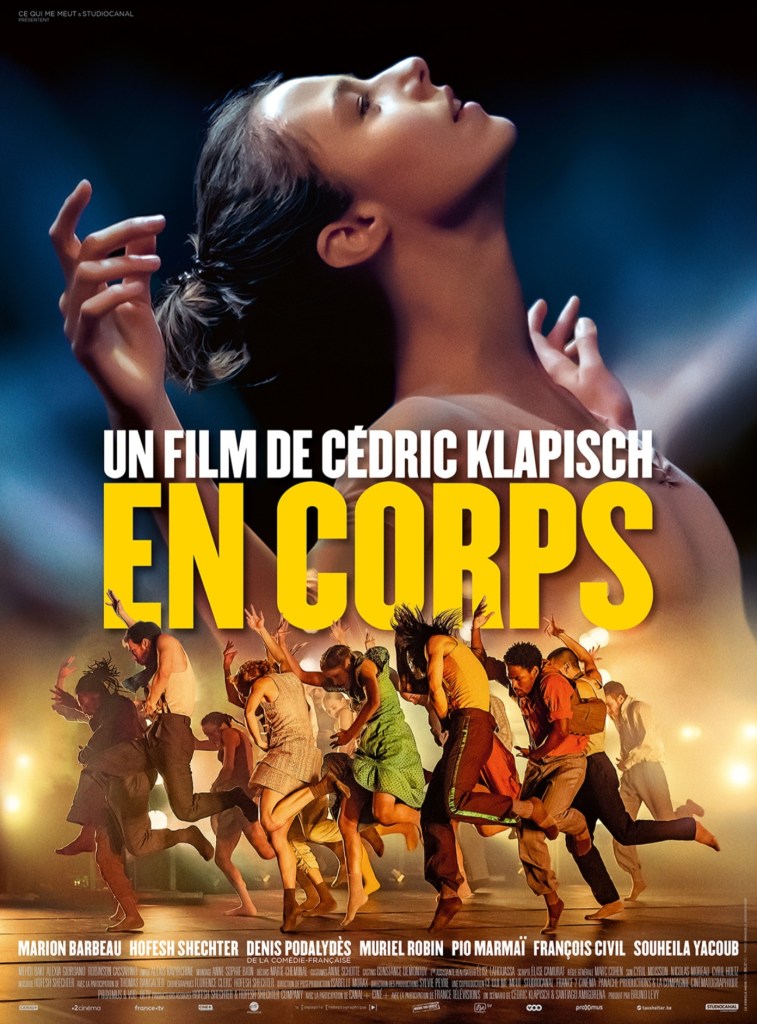
I saw the French film Rise, titled En Corps in French, at the Broadway theater in downtown Salt Lake City last weekend. True to what other critics have said about the film, it does have a familiar, predictable storyline that offers few surprises. However, the plot provides an effective backdrop for telling a satisfying story about healing, changing course when life demands it, and exploring new opportunities.
Marion Barbeau, principal dancer for the Paris Opera Ballet, successfully makes her acting debut in the role of Elise Gautier. Elise is a 26 year old ballerina who is at the height of her career with a major ballet company. Prior to going on stage for her debut performance in La Bayadère, Elise notices her boyfriend, also a dancer in the company, kissing another dancer in the wings. Elise already seemed to be working through some nerves related to her performance, so seeing her boyfriend in a compromising position only adds to her distress. She goes on stage on cue, but she is visibly shaken. She lacks the focus that she needs, resulting in a terrible fall and ankle injury as she dances across the stage.
This opening sequence of the movie contains next to no dialogue — only a few softly spoken stage directions — so director Cédric Klapisch capitalizes on actors’ facial expressions and simple sound effects to communicate the characters’ thoughts and emotions. We see in Elise’s face that she is distraught, but we also hear it in her labored, heavy breathing. When she falls, we hear her body crash against the wood of the stage. This allows the movie-going audience to fall with her and experience the gravity of her injury. We immediately understand and have empathy for her journey that will follow. The opening sequence also contains dramatic shifts in music from the structured, classical style that accompanies the ballet to a more raucous style that communicates Elise’s inner turmoil and the unraveling of life as she knew it. All of these elements effectively set the stage for the rest of the movie, and they drew me in to enjoy what I was watching.
The story continues as Elise consults with a doctor who communicates the devastating news — rehabilitating the injury will likely take 1-2 years. Elise would be 28 and too old to continue as a principal dancer. Within these parameters, this injury means the end of her dancing career. Elise also visits her physical therapist Yann (François Civil) who tries to assist her, but he is dealing with emotions of his own. Yann displays a thinly veiled romantic interest in Elise which he awkwardly communicates, providing some enjoyable comic relief.
Forced to change direction and exploring the idea of living more than one life within a lifetime, Elise joins her friends Sabrina (Souheila Yacoub) and Loïc (Pio Marmaï) while they work as caterers at an artist retreat in Brittany. A group of contemporary dancers directed by Israeli choreographer Hofesh Shechter (playing himself), and including Mehdi Baki (playing himself), stays at the the retreat during the time that Elise works there. Elise quietly observes and then gains interest in this new style of dance that is very different from her own. Sensing her interest, Shechter invites Elise to join the group at various stages of their work. In doing so, Elise finds freedom, renewed joy, and unexpected healing.
En Corps, the French title, offers the audience several layers of meaning that underscore the film’s insights about life. Directly translated, en corps means “in body” which points directly to Elise’s literal struggle with physical injuries and her efforts to be whole again. En corps also alludes to the ballet term corps de ballet, meaning the members of a company who dance together as one body. Elise reflects on where she fits and finds new purpose among the corps of contemporary dancers. En corps also rhymes with the French word encore which means “still” or “again.” As used in English, encore is the exclamation used at the end of a performance to call for an additional performance. This clever play on words points to Elise’s journey to create a meaningful life for herself after her injury. How will she live more than one life within a lifetime? I think the film cleverly asks us the same question, and it is enjoyable to consider what the answers might be.
On its surface, this film may be simple and predictable, but it offers multiple moments to peel back the layers and find worthwhile bits of wisdom. For that, I do recommend seeing it. You can find more information here.
 The Good Life
Leave a comment